
Sammy Albright is a member of Socialist Alternative US
From devastating floods in Texas to the threat of escalating war in the Middle East, every day brings a new reminder of how urgently we need to stop the billionaires from destroying the planet.
Imagine if we utilized the skills of workers in polluting and war industries to produce trains instead of fighter jets, solar panels instead of oil rigs, and affordable, high-quality clothing instead of fast fashion. We could offer all workers in these industries job-retraining programs to make sure they don’t lose their livelihoods. As revolutionary socialists, we believe that working people should be in charge of deciding what and how we produce based on what society and the environment needs, not greedy, reckless billionaires.
Does this all sound utopian? In the late 1970s in England, workers at Lucas Aerospace, a company that produced fighter jets, chose socially useful production over polluting death machines. All workers—particularly those working in polluting industries—and climate activists should study the lessons of the Lucas Plan so that we can blaze a path out of our capitalism-caused climate catastrophe.
Union Militancy in 1970s Britain
In January 1976, workers at Lucas Aerospace in Britain published an Alternative Plan for the future of their jobs. In the 1970s Lucas Aerospace employed 18,000 workers across 17 sites in Britain and Northern Ireland. Fifty percent of its production went to defense contracts.
The Lucas Plan came out of a time of trade union militancy as workers defended their jobs against cuts from increased use of technology. When faced with plant closures in 1971, workers at Upper Clyde Shipbuilders in Glasgow occupied their yard and continued to produce ships. They demonstrated that workers control production, not the bosses. This had a powerful effect on trade union activists around the country.
A wave of factory occupations in engineering plants spread across the north of England, and in 1972 a miners’ strike, followed by a second one in 1974, effectively brought an end to the right-wing Tory government. In 1974, the Labour government announced cuts to the military under pressure from anti-war sentiment stemming from the anti-Vietnam war and anti-nuclear movements. Lucas Aerospace worked on many defense contracts, so the leading network of shop stewards, known as the Joint Shop Stewards Combine Committee, realized that they had to fight cuts.
In November of that year, the Joint Shop Stewards Combine Committee met with Tony Benn, Secretary of State for Industry in the Labour government and a left-winger in the Labour Party. The stewards demanded that the projected nationalization of the aerospace industry include Lucas Aerospace, as part of a wave of capitalist nationalizations which included most of the British auto industry. However, Lucas Aerospace was left out of the newly formed British Aerospace in 1977. Benn challenged the Committee to come up with an alternative strategy for the company, which is what they did. The Committee’s Alternative Corporate Plan, also known as the Lucas Plan, was produced in 1976.
The Financial Times described the Lucas Plan as “one of the most radical alternative plans ever drawn up by workers for their company.”
What Made The Lucas Plan So Radical?
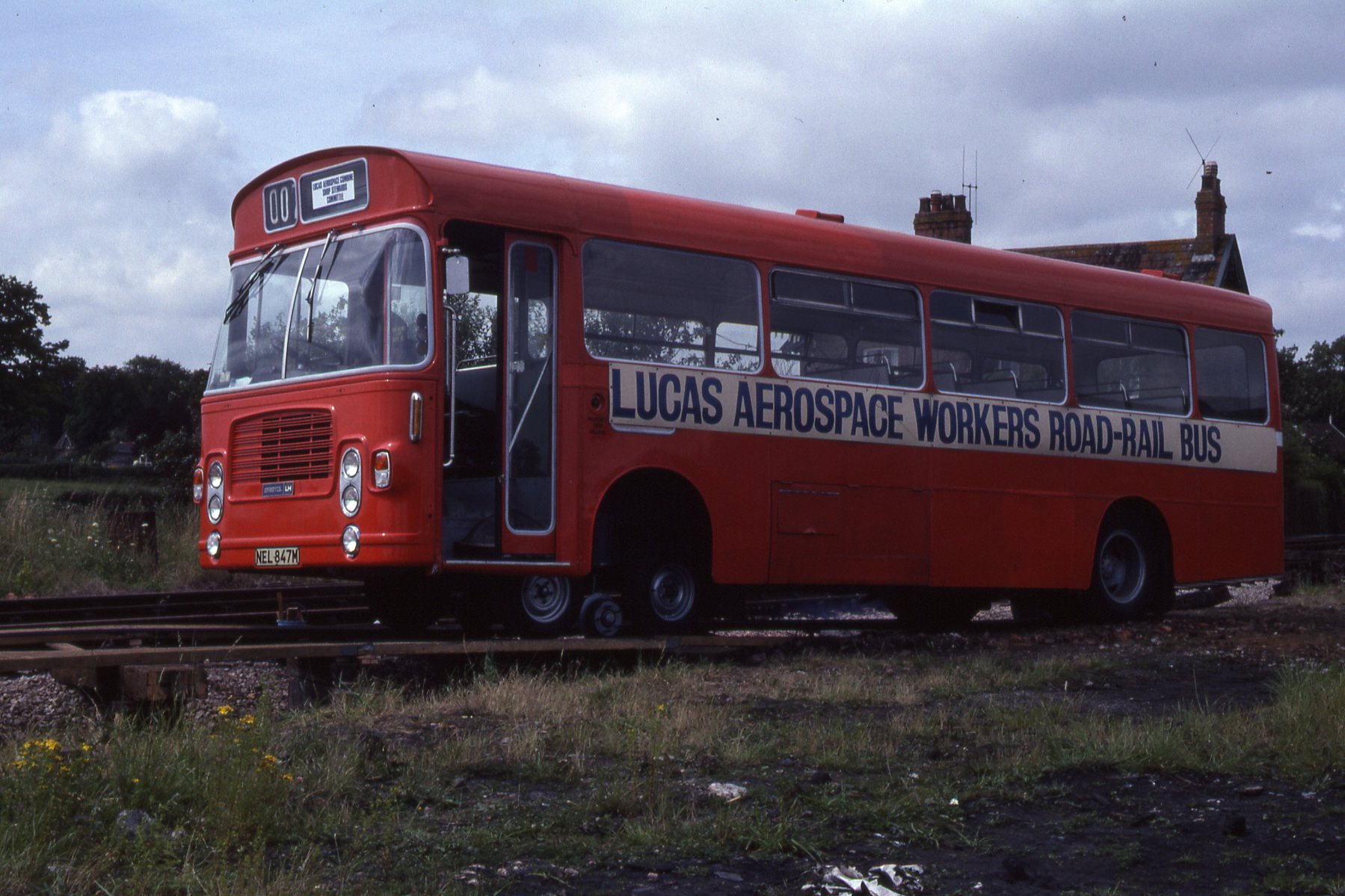
1) The shop stewards council asked their coworkers to draw up the plan, not outside “experts.” Accepted capitalist wisdom says that management, consultants, and outside experts know better than the workers. The workers proved them wrong. They utilized their skills and intimate knowledge of their work to propose a program of over 130 different products that they could produce instead of fighter jets, including solar panels, electric cars, and dialysis machines, which were far ahead of their time. They even invented a new, environmentally friendly and efficient form of transportation called the road-rail bus, which could drive on both tracks and roads to provide rural areas with public transit.
2) The workers based their plan on “socially useful work” rather than profit. In their campaign accompanying the six-volume alternative plan, Lucas workers counterposed fighter jets to dialysis machines, expressing how they wanted to use their skills and knowledge to help people, not create death machines.
3) The plan required democratic public ownership to be implemented. The workers leading the Lucas Plan began to interrogate the whole capitalist system. They simply wanted to use their skills to produce socially useful goods, but that required getting rid of capitalist ownership and putting it into the hands of those most intimately knowledgeable about their production—the workers. As Marxists, we believe that the top 500 companies and banks should be put into democratic public ownership as part of a socialist planned economy.
4) The Lucas workers’ idea spread to workers internationally. Class-conscious workers around the world looked to the Lucas Plan and democratic public ownership as a strategy to fight plant closures. In 1982, the trade union IG Metall at the Blohm & Voss shipbuilding factory in Hamburg, Germany set up the country’s first working group on alternative production in an area wracked by economic crisis. By the end of 1983, around 40 such company working groups had been set up, not only in shipbuilding and the defense industry.
The demands went further and included an overhaul of the company decision-making structures. In Germany, too, neither management nor the government were enthusiastic about the workers’ plans. As with the Lucas Plan, it quickly became clear that the goals of the working groups could not be achieved at the company level alone.
Unfortunately, neither the German alternative plans nor the Lucas Plan came to fruition. At fault for this were not the shop stewards and rank-and-file workers, but the conservative leadership of the unions and the rightward shift in the Labour Party leadership. Implementing any alternative production plan would have required union leaders and political leaders prepared to make a clean break with capitalism.
Bringing about a change of production as ambitious as the Lucas Plan, let alone the conversion of entire polluting industries, concretely requires building a multi-sector, revolutionary socialist challenge to the bosses’ ownership of the means of production, spearheaded by workers in polluting industries. As long as these industries remain untouched and in private hands, we cannot begin to truly address the climate crisis or stop the drive toward deadly war.
Lessons For Today
The Lucas Plan demonstrates that workers in polluting and weapons industries can play a central role in ending war and climate change. For example, when IAM machinists working at Pratt and Whitney went on strike in Connecticut in May, they stopped the production of one of the US’s premier death machines, the F-35, though their main demand was to keep their jobs.
Unfortunately, a number of union leaders have succumbed to the false choice of “jobs vs. environment.” These leaders do not believe workers can win such far-reaching demands. In this context, the AFL-CIO supported building the Dakota Access Pipeline in 2016 for the sake of a few thousand temporary jobs, and a Pennsylvania local of the Steelworkers union endorsed Trump in 2024 because of his commitment to fracking.
The Lucas Plan shows us that, when given the chance, workers choose socially useful work for the good of all of society rather than continuing to produce polluting war machines for the profits of the billionaires. To make anything like the Lucas Plan a reality, we need to confront the entire capitalist system and replace it with genuine workers’ democracy for the sake of the planet and our lives.