Imperialism out of all Latin America!
Stand against pro-capitalist policies on the island, wherever they come from!
Build mass struggle and raise the banner of international socialism and workers’ democracy!
After the US military intervention in Venezuela, Cuba is in the crosshairs of U.S. imperialism. Trump wants to impose historic defeats on the peoples of Latin America and control every inch of what he considers his “backyard.” Defending the Cuban people is an urgent and immediate task. This can only be fully achieved through the independent and united struggle of the working class in Cuba, across Latin America, in the US, and around the world. There is no definitive way out of the crisis and threats facing Cuba without winning genuine workers’ democracy on the island and advancing the perspective of international socialism.
The U.S. attack on Venezuela has opened the way for new imperialist threats and aggressions. We see this dramatically in Trump and Netanyahu’s war against Iran. In Latin America, beyond intimidating and subordinating governments in the region and encouraging far-right forces, Trump has mainly turned the guns toward Cuba. He has waged an outright economic war against the island, intensified the blockade, and imposed tariffs and other reprisals on any country supplying it with oil.
Trump Cuts Oil Shipments to Cuba
By practically taking control of Venezuelan oil and imposing his will on Delcy Rodríguez’s government, he has cut off one of Cuba’s main energy sources. In the face of Trump’s threats, Mexico also stopped sending oil to Cuba.
No other government – including the so-called “progressive” governments in Latin America, nor Cuba’s supposed allies in Moscow or Beijing – has dared in practice to challenge US arrogance. Lula in Brazil, for example, has not lifted a finger in defense of the Cuban people.
In Cuba, the result has been a semi-collapse economically and socially, in a country that depends on external oil supplies. In the past month, blackouts have become far more frequent and prolonged, public transport even more scarce, and refuse collection has ceased, leaving rubbish piling up in the streets. Public services such as education and healthcare – symbols of the revolution’s achievements – are being severely affected. Prices are rising and living conditions are deteriorating drastically. The situation is made even worse as a result of the growing social inequality generated by pro-market economic reforms and the privileges of sections of the state bureaucracy.
After imposing, for over a month, a total strangulation of energy, Trump slightly loosened the tourniquet on the flow of oil, allowing US companies to supply fuel to Cuba’s private businesses, which operate mainly due to pro-market reforms promoted by the regime.
Through this, Trump aims to deepen Cuba’s dependence on US fuel, increasing his ability to blackmail the country. What’s more, by promoting the private sector of the Cuban economy, he is looking to accelerate and qualitatively deepen the process of capitalist restoration already underway.
Economic War and Political Pressure
Imperialism’s strategy combines extreme aggression – open threats of military intervention and waging an out-and-out economic war against Cuba – with elements of political pressure on the regime to push political and economic changes in the direction of capitalism and submission to US imperialism.
With that in mind, Trump has even raised the possibility of a “friendly takeover in Cuba,” as he put it, referring to an attempt to replicate in Cuba the strategy used in Venezuela.
In Venezuela, after the military intervention and the kidnapping of Maduro, the political regime continued under Delcy Rodríguez as acting president, bowing down to US impositions and promoting counter-reforms in the interests of big capital. The most serious example so far is the historic setback represented by changes to the Hydrocarbons Law, opening the way for greater international private exploitation of Venezuelan oil.
The struggle against Trump’s interference in Venezuela today is also a struggle against the policies of Delcy Rodríguez, who acts under the tutelage of US imperialism, without organizing genuine resistance. In doing so, she continues Maduro’s policy of trying to avoid US intervention by making concessions to imperialism while fearing real, effective mobilization from below, with a revolutionary horizon, on the part of workers and the oppressed masses.
Maduro’s Concessions Did Not Save Him
Maduro was unable to prevent his fall, kidnapping, and imprisonment. Even while maintaining some continuity of the Venezuelan regime to avoid greater instability, Trump needed the image of Maduro in handcuffs as a show of force and a warning to other countries.
Despite rhetoric about national sovereignty and the release of Maduro and Cilia Flores, Delcy Rodríguez’s government continues to bank on collaboration with Trump.
For now, they are managing this by sacrificing the rights of the Venezuelan people and rolling back gains won by mass struggle during the Bolivarian Revolution. But for how long? Sooner or later, the US will seek a more reliable political alternative. Sooner or later, popular dissatisfaction with imperialism’s tutelage over the government will surface.
If such a scenario is clearly unsustainable in Venezuela in the medium and long term, it is even less viable in Cuba. Even so, there are clear signs of negotiations between sectors of the Cuban regime and Trump’s government. It is highly unlikely, however, that Trump and Rubio would accept any deal without some heads rolling in Havana.
Young people and workers in Latin America and elsewhere who stand in solidarity with Cuba may wonder whether negotiating with the US and making concessions would be the lesser evil compared to total defeat. That reasoning undoubtedly exists among sectors of the Cuban people after years of scarcity, sacrifice, exhaustion, and, above all, the absence of truly democratic channels for workers to make the key decisions about the country’s direction.
Negotiations with Trump might prolong the survival of sections of the regime, but nothing positive would come out of this for the Cuban people. A deepening of capitalist restoration, an explosion of social inequality, the prioritisation of emerging capital on the island, and foreign investment will never provide a solution for the vast majority.
The only possible way forward lies in the independent organization and struggle of the working class in Cuba and throughout Latin America, alongside resistance by workers in the US, and international solidarity more broadly. That means not simply defending a regime worn down by years of bureaucratic degeneration, but rather a project that revives the true ideals of the Cuban Revolution and a socialist perspective — a project rooted in genuine democratic power of the working class as a fundamental component of building socialism.
The defeat of Cuba and the subjugation of its people would represent an extremely important political victory for US imperialism in its crusade for control of the Western Hemisphere and in its inter-imperialist rivalry with China.
They Want to Bury a Symbol of Rebellion
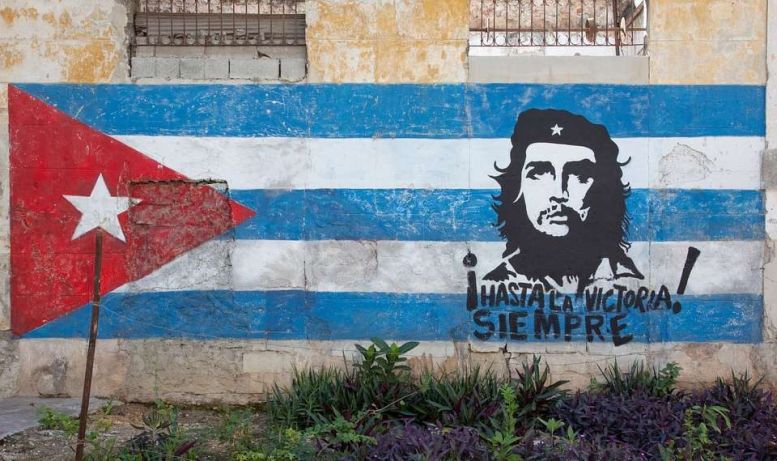
The aim of Trump and Marco Rubio is to impose a historic defeat on what was one of the greatest symbols of defiance against US imperial power. Despite undeniable limits and later setbacks, the Cuban Revolution of 1959 and the abolition of capitalism on the island represented an example for the peoples of Latin America and the world.
A small rebel island next to the world’s largest imperialist power dared to chart its own path, dismantling the basis of dependent capitalism and highlighting the possibilities of socialism, of revolution, and of a future radically different from the misery and inequality imposed on the rest of the region. That spirit must be revived and materialised in the form of a socialist program that can inspire decisive mass action on the island and around the world.