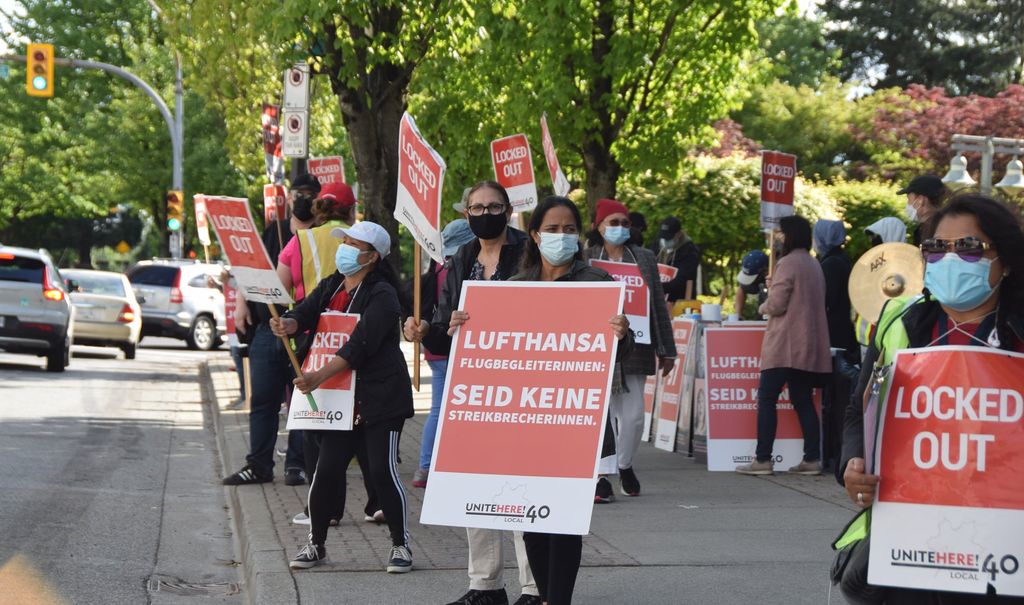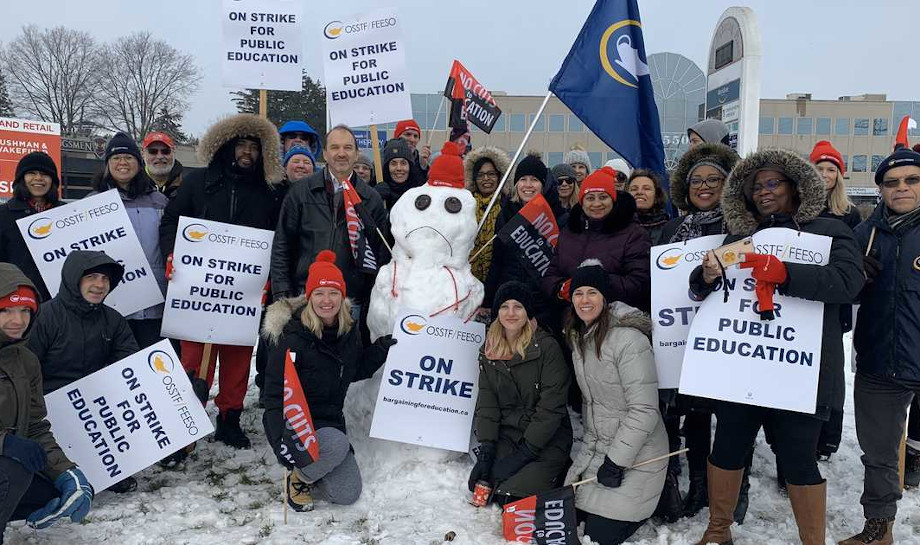
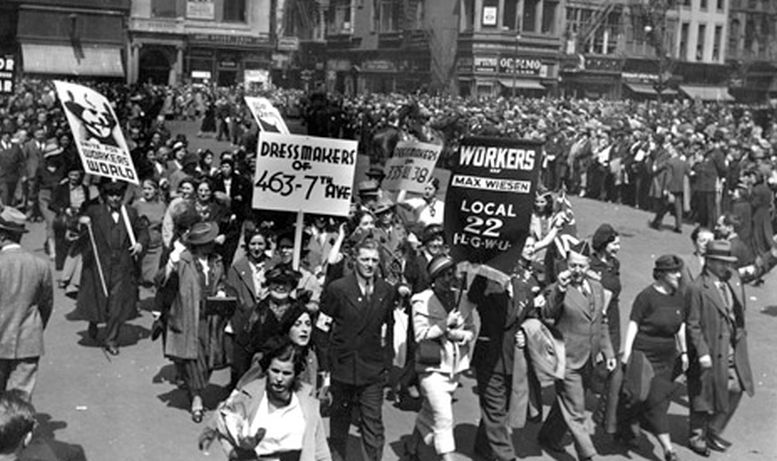
Since industrialization, women in the workforce have been at the forefront of labour organization, fighting against inequality and gender oppression. Before even gaining the right to vote, they strove for the liberation of all working-class people from capitalism. Dangerous conditions and desperate poverty have pushed women to initiate numerous historic strikes in the textile, garment and service industries.
Women are the majority of the workforce that produces society’s clothing. In North America, these have been overwhelmingly immigrant women, who brought tailoring skills from abroad. Today, over 50 million women globally experience the brutal working conditions of these industries, forced to ignore preventable hazards so their employers can exploit them for cheap labour.
In 1911, the Triangle Shirtwaist Factory in New York caught fire, killing 146 workers. In an eerily modern parallel, Tazreen Fashions, a garment factory in Dhaka, Bangladesh, caught fire in 2012, killing 112 workers and injuring hundreds more. In both cases, workers were forced to face the fire or jump from the upper floors, as they were unable to escape through the exits their employers had locked. Just five months later, 1,134 people were killed, and 2,600 were injured when Rana Plaza, another garment factory in Bangladesh, collapsed, sparking widespread protests calling for safer working conditions. Safety plans have now been improved in thousands of factories, but unsafe conditions persist in many workplaces that prioritize profit over human life.
Women-led strikes litter the pages of history books. On International Working Women’s Day in 1917, textile workers in Petrograd, Russia initiated a strike that lasted five days, drawing 200,000 people. This started the Russian Revolution which, after eight months of turmoil and struggle, culminated in the workers and peasants, with the leadership of the Bolsheviks, overthrowing feudalism and capitalism and taking power. In 1934, rolling strikes of 400,000 workers protesting low wages and demands by their employers to increase production output halted textile production in several US states. In 1937, 5,000 dressmakers in Montréal struck against low pay, poor conditions, and the second-class treatment of women on the factory floor. In 1982, a year-long strike involving 250,000 textile workers in Bombay, India fought to obtain bonus pay, and to oppose legislation that imposed forced arbitration on all workers.
These struggles are not unique to clothing production. Working-class women have fought hard across industries to win suffrage, maternity leave, protections against harassment, improved safety standards and increased wages. Much more is possible by expanding the understanding of what working-class struggle may look like today.
The Service, Office, and Retail Workers’ Union of Canada (SORWUC), active from 1972–1986, provides an example of an independent socialist feminist union that focused on typically non-union industries: banks, offices, day-care centres, restaurants, pubs, and workplaces too small to garner support from the trade unions of the time. Although eventually unsuccessful, they fought to unionize pub workers in Vancouver, who experienced gendered pay scales, no medical or dental benefits, no sick pay, no seniority rights, little say in scheduling and no protection against last minute shift changes — conditions not unfamiliar to many working in the restaurant and retail industries today.
SORWUC championed innovative solutions that challenge capitalism, like implementing community-controlled schools and healthcare, providing free parent-controlled child care centres and fighting against rising rents. If it existed today, their demands might include a green energy transition, free public transit, and right to repair legislation.
The working class must put pressure on capitalists from multiple angles to win these demands. As workers organize for better pay and treatment, consumers must also demand transparency at all stages of the supply chain, from farm to mill, factory to retail store. Women are doing dignified work every step of the way, while the capitalist class continues to exploit their labour and endanger their lives for profit. Socialist Alternative supports the revolutionary struggles of women across the globe, opposes capitalist gender oppression, and fights for a future where all workers can live a safe and dignified life. Organizing on International Working Women’s Day is as necessary as ever. Join us!