Performative woke-washing has been replaced by performative woke-bashing
In what might seem a strange paradox, the latter part of the last Trump presidency coincided with a dramatic rise in so-called ‘woke capitalism’. In 2020, with Trump still in the White House, Doritos emblazoned the slogan “Black Lives Matter” on a huge branded mural adorning the front of the Brooklyn Barclay Centre in New York.
By May 2021, the CIA had launched its “Humans of the CIA” recruitment campaign showcasing – incredibly – the intelligence agency’s proclaimed “commitment to gender and racial diversity.” One rather astonishing video featured a CIA agent introducing herself to a social media audience as a “first generation Latina”, “cis-gender millennial” and “intersectional.”
Eye-catching “woke capitalist” marketing campaigns were everywhere – from Disney, to Nike, to BlackRock. Meanwhile, the New York Stock Exchange and the Nasdaq were busy bringing in quotas for companies to have minimum numbers of ‘diverse’ board members.
It almost goes without saying today that this apparent adoption of all things ‘woke’ by some of the largest capitalist institutions on the planet was extremely superficial. As Socialist Alternative (along with many others) pointed out at the time, this “woke-washing” was more than just run-of-the-mill hypocrisy.
To believe the CIA, Coca-Cola, or the New York Stock Exchange were now the inclusive champions of Black lives required you to ignore everything concrete about the real-world impact of these institutions on the lives of working-class Black or brown people in the US, around the world, and throughout their history. Put simply, it was all a lie.
Crisis of the system
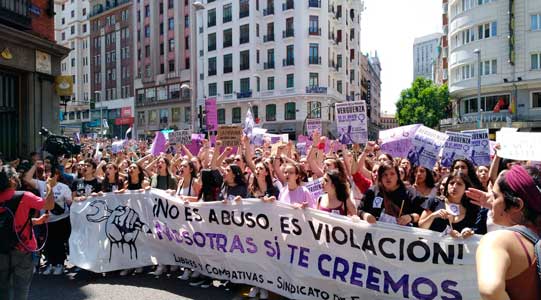
The phenomenon of woke capitalism was really a response by a substantial section of the US ruling class to a moment of deep crisis for their system. Amid the catastrophic handling of Covid, the George Floyd rebellion had exploded onto the streets. The largest protests in the history of the US took place.
Yet the immense Black Lives Matter movement lacked a coherent political leadership with a strategy to win meaningful change to the conditions of everyday life for the vast majority of Black Americans.
Meanwhile, Bernie Sanders’ campaign for the Democratic presidential nomination had generated a huge groundswell of support – only to be successfully thwarted by the party’s establishment. It was out of this moment of mass struggle, followed by setback and disorientation, that a new strategy became dominant among a section of the US ruling class for dealing with large social movements: co-opt and confuse.
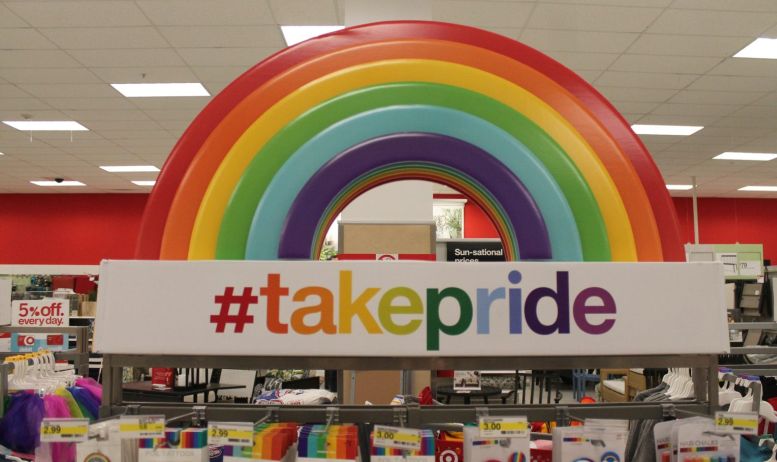
Woke capitalism spread from the US, but it became well established in the UK and other European countries too. From politicians “taking the knee” against racism, to Barclays bank cards adorned with the Pride flag, these kinds of gestures were always extremely limited and two-faced.
Barclays went all in on Pride while simultaneously attacking its trans employees. Starmer took the knee one moment and attacked poor Black and Asian people fleeing war and persecution to come to the UK the next. But tokenistic signalling like this helped feed the mythology of a supposedly “woke” establishment.
Many of the ideas that had been dominant even among some of the most radical participants in the movements of the late 2010s and early 2020s were malleable enough, and flawed enough, to be co-opted by big business – to be used not to unite, but to divide.
In the US, figures like Robin DiAngelo marketed themselves as offering corporate training on diversity. Her book, White Fragility, treats racism as an almost inevitable and inherent quality in white people. It effectively dismisses the gains made by the enormous struggles led by Black people in the past – such as the civil rights movement – by arguing that US society is just as racist as it ever has been.
At the same time, theories like intersectionality could be used by corporations to emphasise the lack of shared experience among working class people – even among those who suffer multiple forms of oppression under capitalism.
In other words, these ideas were effectively used by the ruling class, not to promote a unified struggle against injustice (which would inevitably be a threat to the capitalists) but to undermine it.
Preparing the backlash
Meanwhile, the Biden administration at various times adopted woke language. It did so while simultaneously presiding over a huge crisis of working-class living standards and a dramatic escalation in the global inter-imperialist conflict. In this way, the very same capitalists who claimed at one moment to embrace all things woke actually played a major role in nurturing the now dominant anti-woke backlash.
The narrative of a culture war was deliberately promoted to distract from the growing anger across society at the role of the billionaire class and the incapacity of the capitalist system to provide decent living standards for the majority. The apparent adoption of woke ideas by megacorporations assisted Trump – himself a billionaire – in presenting his deeply reactionary ideas as somehow anti-establishment.
Elsewhere, mini-Trumps around the world, notably Nigel Farage in the UK, enthusiastically followed suit. Their topsy-turvy identity politics holds that the main threat to a white working-class person struggling to make ends meet is the desperately poor refugee crossing the channel. It claims the biggest threat to women’s rights comes from trans people, not those (like Trump) who would remove the right to abortion, or apologise for gender violence.
In a cruel twisting of reality, the most marginalised and oppressed are presented as wielding great power and influence over a shadowy elite. The blame for the crisis of the capitalist system is thereby directed away from those responsible. It lands, instead, at the door of those whom the system victimises most severely.
From woke-washing to woke-bashing
These reactionary ideas currently have huge momentum internationally. Performative woke-washing has been replaced by performative woke-bashing.
Diversity Equity and Inclusion (DEI) is now one of Trump’s biggest bogeymen. It is invoked as responsible for all manner of evils. Indeed, DEI was effectively banned in the US federal government as one of Trump’s day one executive orders.
Following suit, most of the capitalist corporations who were burnishing their ‘inclusive’ credentials just a few years ago, have not only quietly dropped DEI, they’re enthusiastically ripping it up.
A comparison between the approach of some of the biggest corporations in 2020/21 and that of today shows the depth and speed of this rather dizzying turnaround. In 2020, Facebook launched its so-called “50-in-5” goal. The stated aim was that at least 50% of the workforce would come from underrepresented groups by 2024, with a 30% leadership representation target for 2025.
But now that 2025 is here, Facebook’s DEI team has been completely disbanded. Its DEI training program has been cancelled. Its chief diversity officer has been reassigned. Its “Diverse Slate Approach” has been dropped altogether.
BlackRock also publicised aspirational diversity goals back in 2020. These included an aim to increase US Black and Latinx representation by 30%, and to double Black leadership by 2024. This year, they scrapped specific workforce representation goals and removed explicit DEI terms from 2023–24 reports, retrospectively adjusting language to make “softer” references to “connectivity,” “inclusivity” and “diverse perspectives.”
Even before Trump took office, last November, facing a potential Black Friday boycott led by conservative activist Robby Starbuck, Walmart responded with pledges to ditch various DEI initiatives. In particular, it promised to cut back on racial equity training and funding for anti-racist nonprofits. It also promised to review funding for Pride events and end its participation in the Human Rights Council LGBT+ Corporate Equality Index survey.
Crackdown
This sea change goes alongside an increasingly authoritarian crackdown on social movements and those trying to organise against the oppressive policies of the Trump administration. The self-proclaimed champions of free speech are cracking down in the most chilling of ways.
Those organising solidarity with migrants and resisting deportation are threatened with criminal sanctions. Students protesting the genocide in Gaza are being deported and imprisoned. Meanwhile, any serious education about the real history of racism within the United States has been effectively banned by the Trump administration, all under the guise of outlawing ‘critical race theory’.
In Britain, even though Farage is not in power, he increasingly sets the agenda in British politics. Starmer has attacked migrants and refugees using language directly lifted from the infamous ‘Rivers of Blood’ speech of Enoch Powell. The Labour government has thrown trans people under the bus, despite having previously claimed to support trans rights. By adopting the divisive approach of the far right, Labour is fuelling its rise. Reform is now so far ahead in the polls that it seems possible that it could form the next government.
All this underlines the need to build mass movements that can push back against the right, resist attacks on marginalised oppressed people, and cut across the divisive lies that pit working class people against one another.
Capitalism was not woke, and nor can it ever be. But, at the same time, the fact that corporations could so easily use and abuse the ideas that have become so prominent within progressive circles and movements emphasises the need to develop a unifying, class-struggle-based approach to fighting back.
This doesn’t mean lowering or relegating the demand for justice for the majority of working-class people internationally who face different forms of oppression under capitalism. It’s more the opposite. Struggles against oppression need to be stepped up, linked together, connected in a clear way to the fight against the capitalist system.
We need to develop a program that can unite working-class people and build real and meaningful solidarity.
System change needed
This is necessary because it’s the working class, in all its diversity, which is the force most capable of winning meaningful change, and ultimately of threatening the system itself.
Socialist ideas are an antidote to the lies of the right because they explain clearly the ultimate cause of the hardship faced by working-class people of every race, gender, ability, or nationality. They are unifying not because they deny the specific and diverse experiences of millions of oppressed people around the world, but because they understand that this oppression is rooted in the capitalist system, which thrives on oppression and division. And it explains how this system can only be dismantled by a movement of the “great majority,” as Marx famously put it.The source of the profits of every capitalist corporation is the same, whether it claims to be woke or anti-woke: the exploitation of its workers. That’s why when workers unite together, both industrially and politically, they are a formidable power which has the potential to threaten the rule of the billionaire class.
We stand for a socialist society – based on common ownership over the biggest monopolies that currently dominate millions of lives, and a democratic plan to produce and distribute what people need and want, without destroying the planet.
We stand for an end to racism, sexism, homophobia, transphobia, ableism and all forms of oppression. We understand that it is only on the basis of socialist change that we can lay the foundation for a society that is free of all of these scourges, and offer a bright future to working-class people the world over.