Nepal, Indonesia, Morocco, Madagascar, Peru, Timor-Leste, and the Philippines – Gen Z rises up
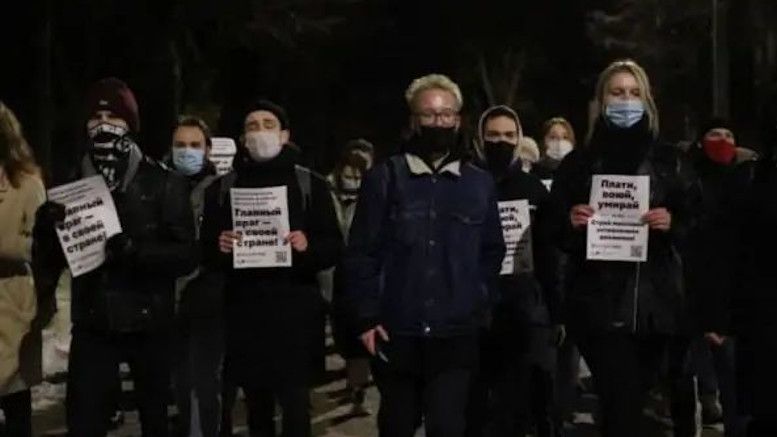
Corruption, unemployment, and inequality run rampant across the world. But Gen Z has had enough of capitalism’s crises and is fighting back. In Indonesia and Nepal, tens of thousands of young people kicked off revolts against gross displays of corruption, and their demands quickly expanded to address societal inequality and bleak future prospects. These revolts are spreading to all corners of the world, from Morocco to Peru and more.
This generation came up in a world defined by declining living standards following the 2008 global financial crisis, punctuated by a global pandemic, and plagued by the rise of the right-wing authoritarianism around the world, all on the backdrop of a devastating climate crisis: there’s no shortage of grievances to revolt against. Record unemployment, especially impacting young people, is endemic, and not confined to the less-developed countries that have been ravaged by imperialism. In the US today, there are more unemployed people than available jobs—but not to worry because Nvidia just became the first company valued at over $4 trillion (sitting at $4.6 trillion at time of writing)! Young people in the US need to draw inspiration from the international wave of revolts.
It comes as no surprise that young people are leading these protests. Gen Z (those born between 1997-2012) is coming of age in an era of existential capitalist decline, facing a historic crisis of downward mobility. Because of the wave of Gen Z protests, governments have been overturned and new ones have been ushered in making big promises of change. But these new governments, still capitalist ones, have no solutions for inequality and lack of opportunity and just stop the movements from going further. It’s not enough to be against corruption and inequality. These protests need to be armed with a socialist program, fighting for an alternate vision of society that takes companies into democratic public ownership, builds affordable housing, starts jobs programs, and more. Ultimately, overthrowing capitalism will require the working class to take the lead.
Nepal: Revolt Drives Out Prime Minister
Nepali youth took to the streets in early September after the government banned 26 social media apps. This ban was a heavy-handed attempt to muzzle a viral social media trend exposing the extravagant lifestyles of politicians’ children. These #NepoKid videos were emblematic of deep inequality in a country ravaged by unemployment and corruption. The median age in Nepal is 24, with 21% youth unemployment.
The massive inequality that provoked the protests was described in an Instagram comment on a public officials’ post: “Citizens don’t have salt. But you have to eat on gold and silver plates.” Ranking 107th out of 180 countries on the global corruption index, Nepal’s capitalist government is completely out of touch with the needs of the masses. Their bloody crackdown shows the capitalist state’s real priorities lie in protecting their own power, with reports of at least 150 people killed.
This crackdown was overseen by supposed “communist” prime minister K. P. Sharma Oli, of the Communist Party of Nepal-Unified Marxist Leninist, which is communist in name only and is far from a fighting vehicle for the working class and oppressed of Nepal. The pressure of the protests forced Oli to step down as prime minister. As parliament buildings were set on fire, young people elected a new prime minister in a manner that can only be described as the epitome of Gen Z: democracy via the gaming chat app, Discord. They elected Sushila Karki as interim prime minister, a career judge who has served on high courts in Nepal.
Indonesia: Parliament In Flames, But What Comes Next?
The protests in Nepal came on the heels of student-led protests in Indonesia against a proposal to add a $3,000 housing subsidy to the already extravagant salaries of public officials—10 to 20 times the minimum wage throughout the country! The state tried to repress the protests, and eventually an armored police vehicle killed a 21-year-old taxi delivery driver, Affan Kurniawan. In a country where an increasing number of people face precarious and low-paying gig worker jobs, this tragedy tapped into a deep societal anger, causing more protests to erupt. Importantly, gig worker unions played a role in organizing these protests.
Indonesia saw 20,000 layoffs per month in the first half of this year, and president Prabowo has been the face of massive budget cuts, the consequences of which are passed down to the masses with increasing taxes and cutting programs. But unlike Nepal, Prabowo has been able to stay in power through concessions to the movement. Since the protests started, he’s rolled back the housing allowance and made a substantial payment to Kurniawan’s family.
These concessions don’t address the deeper-rooted issues that led to these protests, which emboldened the movement to keep fighting for more, initially. When concessions weren’t enough to stop the protests, the state resorted to severe repression, using guns and tear gas on the protesters and turning off the electricity in areas where demonstrations happened. Although the protests have since shrunk, this revolt gives a glimpse of what can be won through mass struggle. But in order to fundamentally address these crises, the broader working class needs to take up the fight for more than just concessions, and for democratic workers’ control over society.
Lessons From Bangladesh
Just a year ago, a similar revolt took place over the course of five weeks in Bangladesh, where student-led protests drove out the prime minister Sheikh Hasina. The spark then was the civil service employment quota system, which required 30% of government positions to be filled by family members of freedom fighters from the 1971 revolution. In a country facing 11% youth unemployment, government positions were largely inaccessible, unless you were a family member of someone in the ruling party, the Awami League.
The state acted ruthlessly in repressing the movement, murdering over 1,500 protesters during the uprising. The largely leaderless protests quickly escalated, and critically included key unions and workers’ organizations entering struggle alongside the students. It was the entry of the workers’ movement onto the scene that forced the state to negotiate with the student protesters. While the students had put forward a bold fight, they chose establishment economist Muhammad Yunis to lead the interim government.
Now a year after the protests, the new chief adviser Yunis has done nothing to address the root of the issues that young people face like inflation, corruption, and a weak job market because he is simply a new caretaker for the capitalist system. This has left many people today questioning the bloody sacrifice made by thousands and if it was worth it. The memory of these brave protests must be kept alive but escalated to fight for more than a change of capitalist regime.
No Going Back to The Status Quo!
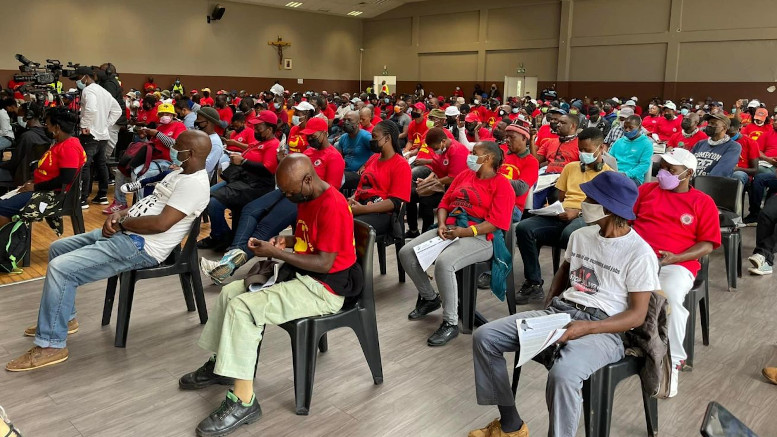
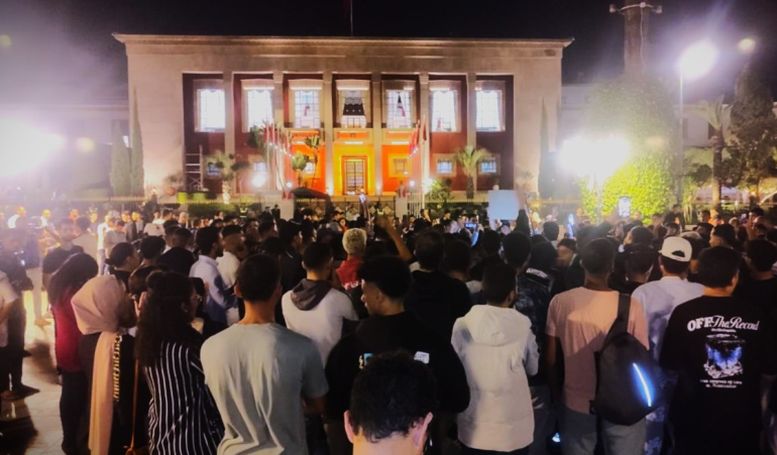
The revolts in Nepal and Indonesia have been cited as inspirations around the world: for anti-nepotism protests in the Philippines and for upheaval in Timor-Leste over free luxury cars for public officials. This wave of youth unrest is spreading rapidly, so far to Morocco, Madagascar, and Peru. While all of these movements are different, there are key similarities that tie them together. Masses of young people are fighting back against corruption, and these immediate concerns are broadening out into larger economic demands, because people see how they’re all connected. These protests pose a real threat to those in charge. At the same time, they have not put forward a clear alternative vision to society, and the working class has yet to clearly put its stamp on the movement.
The working class is the only class capable of reorganizing society on the basis of the needs of the many and not the few. Students and young people have been playing an outsized role in these protests, but they need to spread to the wider working class, which is capable of shutting down factories and businesses. The working class is able to drive the struggle forward to fight for nationalization of industries, jobs programs, and affordable housing.
Another thread tying these largely leaderless and spontaneous protests together is their rejection of the mainstream political parties. But without democratic organization, it’s inevitable that leaders arise undemocratically and that movements dissipate. New parties, organizing mass meetings of the working class and youth, are necessary to organize the struggle democratically.
This isn’t just happening because of social media. Social media can serve as an accelerant, but the fundamental driver of these protests is the rotten decay of capitalism, which spawns horrific conditions and unstoppable unrest that can quickly spread internationally. The capitalist system is a global system, and the interests of the working class are fundamentally tied across borders. The fight for socialism can’t be contained to one country and needs to spread internationally, especially in the belly of the imperialist beast in the US. That’s why International Socialist Alternative is organized sections all over the world: because we think these movements are all linked to a global struggle for working-class liberation. Join us today!