“Coming on top of the Ukraine and tariff wars, the Iran war is shaping up to be the biggest stagflationary shock the world has seen in five decades.” (Kenneth Rogoff, former Chief Economist of the IMF)
Donald Trump has retreated from his April 8th deadline to flatten Iran, but the current temporary ceasefire can still go two ways. It is hard to imagine Trump accepting such a humiliating defeat and yet an escalation would be a hugely unpopular step worldwide. This war, in part an attempt to grab Iran’s oil follows his tariff war which lacks evidence of success, and the huge setback for his private army ICE in Minneapolis in January.
It seems like a lifetime has passed since Trump first announced raising US tariffs to their highest level in a century on April 2, 2025. The so-called Liberation Day tariffs, blocked by the Supreme Court this February, were aimed at shoring up US economic dominance, masking its decline and containing its main economic adversary China.
The extreme tariffs signalled a shift away from past administration’s use of standard soft power bullying towards naked predatory aggression. The tariffs did not dramatically raise inflation, as corporations reluctantly absorbed most of the costs, although estimates calculate tariffs made the average US household $600 poorer. At the same time, Trump’s promises that import duties would magically close the US trade deficit and bring manufacturing jobs back to the US has entirely failed to materialize.
However, the world and all trading relationships in 2025 were not exactly unchanged. The two biggest powers, the US and China have further dramatically reduced their direct trading between each other. The US has bullied Europe into paying higher tariffs for access to its huge market. The EU has been additionally hit by cheap Chinese exports, while China itself has been forced to shift exports to its closer neighbors. Russia is still economically dependent on China as its main oil importer though the temporary lifting of sanctions and the rise in the price of oil has been a bonanza. In short, the world economy continues to be heavily affected by the decoupling between its two key economies, the US and China.
If it weren’t for the 2025 AI bump, the world was likely on its way towards a recession. Despite AI’s sky-high valuations not being reflected in actual profitable returns, AI-related trade represented a third of growth in world trade last year. This year’s cooling of Nasdaq tech stocks points towards the AI bubble beginning to hit its limits, as one half of all new US data centers planned for 2026 are currently cancelled or delayed.
While evidence of the economic damage of Trump’s tariffs is mixed, his war on Iran has been, beyond its humanitarian brutality, an absolute economic disaster. The current Iran war energy shock opens the possibility of a 2008 or even a 1973-scale economic crisis. The 2022 Ukraine war which sent many European economies into a fuel crisis, pales in comparison to the potential fallout of the current Iran war.
At the outset of this war, the world was in a much weaker starting place with far more overleveraged debts coupled with much higher interest rates. Record debts and deficits undermine the ability of governments to cushion the pain of this oil shock. Additionally, unemployment has been edging up with consumer confidence in decline. While Europe was hardest hit by the Ukraine war energy shock, blocking the Strait of Hormuz is already hitting Asia hardest and its fallout will generally be more global. The US has even been forced to grant a temporary sanction reprieve for Asian nations to use Russian oil, strengthening China’s closest global ally.
Operation Epic Fury was intended, in part, to reassert US dominance in the region and globally. However, the prior surgical arrest of the Venezuelan President and the compliance of their new regime was never going to be repeated in Iran. Trump’s plan of “go in, reach a deal and get out” lies in tatters. To superficially stabilize markets Trump is under pressure to declare a victory and retreat, but in reality even a prolonged ceasefire will be seen as a defeat and huge embarrassment for US power. Trump’s call for Congress to write him a $200 billion check for the war has now been replaced by the demand for a $600 billion rise in the US’ defense budget, signalling a trajectory towards wider wars.
Rising Prices and Rising Interest Rates
Brent Crude oil has recently had its fastest rise in prices ever, surpassing its rapid rise during the first Gulf war. A protracted war could drive oil prices up to or even past $180/barrel, exceeding its price during the 2008 recession. The oil crisis in the 1970s pushed inflation above 10% for most of the world for the best part of a decade. Today, the European Central Bank projects higher oil prices pushing inflation up to 6%. The general anxiety has led top investment banker Goldman Sachs to bump up the likelihood of a US recession in the next 12 months to 30%.
While the US is potentially more sheltered from the energy shock as a net oil and gas exporter, this has not prevented price gouging by US oil companies. In California gas can now cost above $7 per gallon. High fuel prices will impact the prices of all goods that are transported as well as food which is dependent on mitogen fertilizer, a byproduct of fossil fuels.
The neo-colonial world will bear the greatest hardship of price hikes, given the low level of disposable income among working class people there. These countries, particularly those in South and Southeast Asia which depend on fuel from the Middle East, in the last two decades have become an increasing base for manufacturing, with factories that are highly energy-intensive. As prices rise, these goods may be priced out of the market leading many factories to be forced to close, pushing workers into unemployment in countries with no jobless benefits.
Traditionally, jacking up interest rates is a tool used by central banks to try to tamp down rising inflation, on the basis that it squeezes money supply, reducing the amount of money chasing products. However, even before the war, interest rates had already been hiked: German and French interest rates are their highest levels in over a decade. More interest hikes are almost inevitable, which will further deepen the crisis of demand. Prior to this crisis, almost every central bank in the developed world had plans to cut interest rates to try to turn around their sluggish economies. All the rate-cutting plans are now derailed.
Stagflation
While US Federal Reserve Chair Jerome Powell has downplayed the prospects, stagflation – the mix of inflation with a slowing or recessionary economy now appears inevitable. Unlike the pandemic and post-pandemic inflation, which was twinned with high labor demand, the coming inflation shock will be accompanied by high interest rates, layoffs and reduced consumer buying power.
Many capitalist economists credit this century’s economic successes in part on a skilled monetary manipulation of interest rates. Stagflation puts the central banks into a dilemma that cannot be solved by the usual formulas. Inflation is a nightmare from a business perspective: it drives away purchasers, it destroys predictable business planning and eats into profits. However, inflation’s antidote, hiking interest rates, will almost definitely delay any economic turnaround.
Rising interest rates not only threaten new borrowing but can hike the cost of old borrowing: debt. Corporations and governments are more indebted today than ever before. In this new era of nationalism and war, government budgets worldwide are radically increasing defense spending. This in turn has added to record existing levels of government debt. Liberal and right-wing governments have tended to abandon a fiscally conservative approach to budgets, as billionaires continue to operate practically tax free, all helping to balloon public debts globally.
This year, the interest payments on the US federal debt will exceed $1 trillion or 17% of the US federal budget. The US needs to find more people willing to lend it money. However, foreign investment in US treasury bonds has fallen to its lowest level since 2012. The legacy of last year’s tariff trauma has led many global investors to hesitate to invest in the US. Many foreign governments are also withdrawing their money to pay for rising domestic energy and other costs at home. US Treasury yields – what the US has to pay to get people to buy their bonds – have gone up over half a percentage since the Iran conflict began. At some point the US’s ability to pay back its debt could become unrealistic.
The world may be witnessing the unravelling of the petrodollar system established in the 1970s requiring oil exports to be priced and traded exclusively in US dollars. This agreement, primarily with Saudi Arabia and the Gulf states was in exchange for security guarantees. These dollars were then recycled into U.S. Treasury securities, strengthening the dollar’s role as the world’s primary reserve currency. Iran has always been a thorn in the side of the agreement, but rather than consolidating US power in the region, the war seems likely to have the opposite effect.
The 2008 Financial Crash & Today
There are many elements in the current evolving economy that are reminiscent of the 2008 financial crash. The AI data center boom represents a race that will end with, at best, a small number of winners and a large number of losers. As this race concludes, the economic fallout will be quite wide. Another prospect for the end of the AI bubble is the collapsing confidence of a stagflationary world economy where interest rates spike and price inflation creates the kind of volatility that discourages investment.
Alongside the AI boom is the huge expansion of the $22 trillion private capital market, the non-publicly traded economy that raises and uses capital for start ups, corporate takeovers and to make direct, often risky loans. These capital investments offer the possibilities of very high earnings with relatively high risks. A top banker quoted in the Financial Times said “alarm bells” are ringing over the “slicing and dicing” of loans, with uncomfortable echoes of how the US subprime mortgages were also repackaged and sold around the world in the run up to the 2008 crash.
Poor underwriting, questionable valuations, ill-suited investment vehicles and out-and-out fraud are normal during any capitalist boom and more so in periods where governments openly encourage under-regulation. The super under-regulated crypto market, now losing much of its sparkle, captures all that is sick about the current era of capitalism.
US capitalists’ avarice and predatory nature knows few limits. Trump is now pushing legislation to allow pension funds into these wildly unpredictable private markets. Private equity has increasingly opened its doors wider to retail (working class) investors – to double up capitalism’s exploitation of working-class people. Additionally, the sports betting world is busy bankrupting working-class families as it has grown from a $21 billion industry in 2020 to $167 billion today in the US alone. What underlines this process is not simply greed at the top, but a sense of pessimism, gloom and cynicism that pervades the top echelons of corporate America.
The cheap credit of the first part of this century has also created many zombie companies: entities that barely generate enough money to pay the interest on their debts. The Xerox corporation has $4 billion in debt, has lost 95% of its share value over the past five years, and has a current equity value of $100 million. Such companies are prone to takeover by “vulture fund” capitalists, who often buy companies at 10 cents on the dollar and then asset strip them.
According to the New York State Association of Certified Public Accountants one in five US corporations may be zombies. The proportion of US companies having trouble making their debt service payments has more than doubled since 2019 to 20%. Andrew Milgram of Mablegate Asset Management identified this period as the best moment for vulture capitalists since 2008, telling the FT, “This is the greatest opportunity I’ve seen in my lifetime. I couldn’t imagine God would smile on me like this.”
All of these speculative and hyper predatory aspects thrown into the mix of a stagflationary recession will make both the economy and the social crisis far more explosive.
Can China or Europe Save the World Economy?
The Chinese economy is still trying (and failing) to recover from the collapse of its property bubble. The national and local governments are weighed down by record debts. While China has benefitted from discounted Russian oil, China is also Iran’s largest purchaser of their oil and an important customer of the Gulf states, which means the war will be more than a hiccup for China.
BYD, China’s key EV maker has seen sales fall for 6 months in a row. The Chinese auto industry is now producing 25 million more vehicles than it can sell. Its dependence on export-led growth is simply unsustainable and will implode in a global recession. While these Chinese EVs are effectively banned in the US, the Europeans have far lower duties on them and are hoping to exploit the influx of these cheap EVs to drive down autoworkers’ pay in Europe without allowing it to destroy their own industries.
While the US tramples upon international laws and regulations, and China works around them, only Europe appears to defend the old rules-based system. This is not a sign of Europe’s strength but its weakness as a group of global power whose influence has declined qualitatively relative to the US and China. Europe’s ability to act cohesively economically and militarily is limited by its lack of effective central government. Efforts to deepen the EU’s single market have possibly reached their limits. Europe has also been unable to increase productivity and is now increasingly left to fund the war in Ukraine alone.
Unlike the 2008 financial crisis when the richer nations pulled together to try to save their economies, the end of the era of neoliberal globalization and the rise of protectionism, expressed by Trump’s regime, has made the prospects of cooperation far more unlikely.
Long Term Crises Unaddressed
The tensions between the US and China express the crisis of capitalism in the dominant powers and the limits of development for a once rising power. Productivity has collapsed over 50 years for developed economies; averaging 4% increase on a yearly basis after 1950, then dropping to 1.9% from 1973-2009, with a further drop to 1.2% from then to now. While productivity has climbed in China, its rate of productivity change has also begun to flatten out.
China, like almost all developed nations, is also in a crisis of aging demographics. Fertility rates in rich economies have halved in the past 60 years, creating much higher pension and healthcare costs per worker than ever before. Twenty five percent of Japan’s population is now over 65. In South Korea, kindergartens are being turned into nursing homes and wedding halls into funeral parlors. The current anti-immigrant policies of far right and liberal governments alike, are making this situation worse, even from a capitalist perspective.
Climate disasters continue to unfold at an increasing pace, yet the capitalists are moving back to the dirtiest of all fossil fuels: coal. As rich countries began to move away from some fossil fuels, they instead offloaded their coal habits on to poorer countries. Almost every east Asian nation has been increasing its use of coal. India generates 75% of its electricity with coal and even Japan uses it to power a third of its energy mix. Like war, climate change makes some people rich while being an economic catastrophe for the working class. Impossibly high war and climate insurance rates will be passed on in pricing as instability has become the norm.
Perspectives
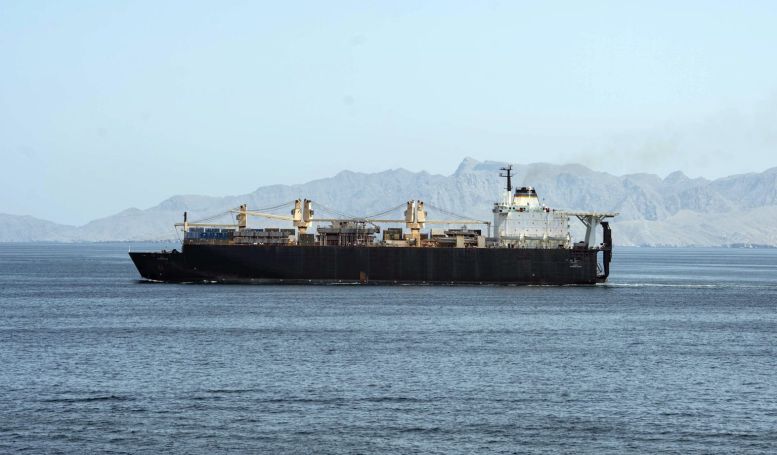
The Strait of Hormuz is now controlled by Iran through its use of relatively cheap drone attacks across the waters making shipping uninsurable. Not a single ship has been sunk, yet Iran is now able to tax users of the waterway, taking payments in Chinese Yuan or in crypto.
The US ruling class is aware that the functional closure of Hormuz is also a dress rehearsal for the possibility of a Taiwan Strait closure or wider blockade. The Taiwan Strait shipping lane is critical for South Korea and Taiwan, who together represent the lion’s share of the world’s chip exports. The primary theatre of a future US-China direct conflict would be in the Western Pacific.
Inflation will now again be on the global center stage. The Ukraine war proved that inflation is not a single punch but involves a whole series of price shocks as inflation makes its way through the economy. The energy crisis created by the Iran war will accelerate all the pre-existing crises: inflation, layoffs and unsustainable debts. This also all adds pressure on the walls of the AI bubble, making its collapse far more likely in 2026.
In 2003 when the Afghanistan war began, few would have expected it to last 20 years and cost over $2 trillion. Even if the Iran war ceasefire continues indefinitely, it would take between 3 months to 5 years to get all oil and natural gas production back online.
The United Nations’ World Food Program’s CEO, before this oil crisis, called 2025 “the hardest year” for hunger in decades, prompted by both the severe USAID cuts and escalating wars in Gaza and Sudan. The WFP is currently cutting 5,000 jobs while 300 million people are facing acute hunger. On the other end of the scale, Oxfam estimates the rich have stashed $3.5 trillion in tax havens; double the GNP of the world’s 44 least developed nations.
But resistance is developing. In the Philippines, which imports 95% of its crude oil, transport workers led a 2-day general strike at the end of March against the government over surging fuel costs. “Our call is to link the struggle across different sectors. Broaden the fight because this is no longer just for the transport sector – it is for the whole country,” explained strike leader Sonny Melencio. Struggles over skyrocketing fuel prices, inflation and increased cost of living are likely to develop elsewhere as well.
China may come out of this conflict temporarily strengthened. Despite its multitude of inherent crises, it has stored more barrels of oil than any other nation and has made greater steps towards adopting renewable energy. US imperialism on the other hand is weakened, overextended and appears to lack a coherent strategy. None of this is good news. All of this points towards more conflict and war, and a working class who will be expected to pay for it with our lives and out of our pockets. As capitalist chaos envelops the globe, the need for socialist, democratic planning of the economy on the basis of human need and the environment is more urgent than ever.