How Can Workers Fight Back?
Just under a year ago, John Healey, Labour’s Defence Secretary in Britain, visited a munitions factory. There, he made a speech extolling the virtues of a dawning new era of “military Keynesianism.” Slashing overseas aid budgets and “reinforcing the British industrial base” would lead to “more jobs in every part of the UK,” or so he claimed. In a typically unconvincing Starmerite performance, workers were asked to believe that the ratcheting up of inter-imperialist conflict and the ruling class’s drive towards militarism would have a silver lining: better jobs, economic growth, and prosperity.
Even as Healey spoke these words, almost no one truly believed that increased military spending would improve the lot of working-class people. The idea of “military Keynesianism,” which in short is that by spending extensively on defence, economies can grow, has enjoyed a certain vogue. But the ideologues of the capitalist system have spent much more time over the past year discussing the “unsustainability” of the European welfare state in the context of a growing “requirement” for money spent on armaments. From the vantage point of today, Healey’s remarks look quite astonishing.
The Price of War
Working-class, poor and oppressed people always pay the price of war. They do so most directly and most devastatingly in the parts of the world where conflict is raging – where imperialism is most direct and murderous. But even in countries like Britain, where workers are lucky enough not to be facing bombs, tanks, or missile strikes, working-class people are paying and will pay a heavy price for war and militarism.
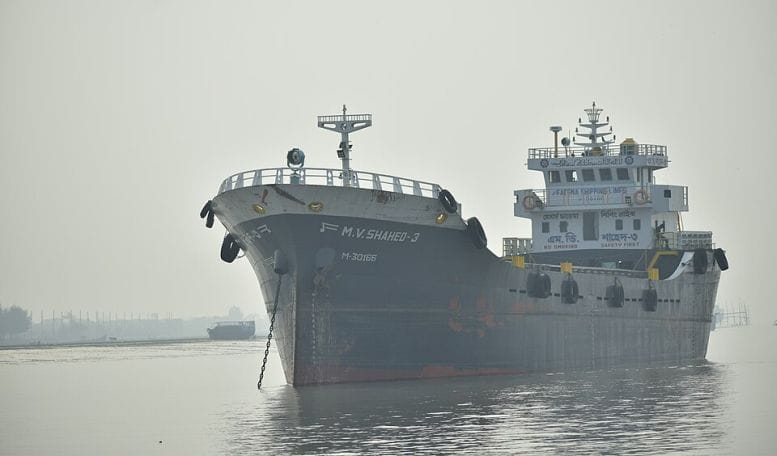
The US-Isreal war on Iran, in particular, has triggered a global economic crisis. Since Trump and Netanyahu began their attack, what has taken place is the worst crude oil supply shock in all of history. More than 20% of the world’s oil and liquified natural gas typically passes through the Strait of Hormuz. Yet, the Strait remains closed for most tanker traffic, with negotiations (humiliatingly for the US) failing to secure its reopening. This situation means that around 10 million barrels of oil per day are “shut in.”
These “shut ins” are not simply a matter of oil being sat in tankers unable to move, with everything set to immediately return to normal once the strait is reopened. It is estimated that it may take months, perhaps even years, for the oil supply to return to normal. Some oil wells may have been damaged permanently as a result of the rapid shut-downs when the war first began. Others will need to be unclogged before production can return to normal. It is expected that Iraq, for example, would take at least nine months to be able to reach the same rates of production it had before the Iran war.
Oil Shock
Oil prices have now risen to their highest levels since 2022. Of course, it’s worth remembering that the cause of the previous peak was also a war: the invasion of Ukraine. That conflict was a key factor in triggering the most severe cost of living crisis in decades.
But it was not a crisis that was ever truly resolved. What is coming now is a crisis heaped on a crisis. And workers’ living standards are once again set to take an almighty hammering.
In the UK in 2026, petrol prices have already risen by 24p per litre since the start of the war. It’s 46p for diesel. Disgustingly, this is at the same time as oil companies are recording some of their highest ever earnings. BP is reported to have doubled its profits since the start of the Iran war. This is a staggering reminder of the absurdity of the capitalist system if ever there was one.
Food prices are also rising rapidly, with up to three million households in the UK being forced to skip meals, according to a report published at the end of April. This is partly due to the enormous increases in the price of energy, which has a natural knock-on effect on the price of food and other goods. But there is also an acute raw materials crisis which has been triggered by the war. This is particularly impacting the price of fertilisers.
35% of the world’s supply of urea, an essential ingredient in many fertilisers, comes from the Gulf states. Meanwhile, a vital raw material for nitrogen-based fertilisers – ammonia – is a gas so toxic that it is widely considered to be too dangerous to store amid war and missile strikes. This has led to countries including Qatar shutting down production of the gas entirely. This crisis in the supply of fertiliser is now so acute that there are fears of a global auction taking place. This poses the danger that those in the poorest countries are simply unable to obtain adequate amounts of this vital product. Widespread famine, particularly in parts of Africa, is a very real potential consequence of this.
Debt
Meanwhile, as the world economy has faced shock after shock since the financial crisis of 2008, capitalist states have repeatedly been forced to intervene to save their own system. Billions have been spent to prop up failing banks and industries, with the bill laid at the feet of working-class people. The impact of this has been a massive increase in sovereign debt. Indeed, global sovereign debt is now approaching a massive $106 trillion. In the context of a global economic downturn brought on by this war, there is a deepening nervousness developing on financial markets about the potential for a new “debt bubble” crisis. But unlike in 2008, where the debt crisis was based in the private sector, there is potential that such a crash could this time be triggered by state-held debt.
Even without a new financial crisis, a global recession may well be unavoidable. Meanwhile, Britain’s economy is especially vulnerable to all major international shocks. In the International Monetary Fund’s recent half-yearly update, it warned that the UK would suffer the sharpest growth downgrade and joint highest inflation rate in the G7 this year. This is expected to be the case, even if the fall out from rising energy prices can be contained by the middle of this year.
Rachel Reeves may have found some words of rebuke for Trump when visiting the US on 1 April. But the chancellor, and her government as a whole, has nothing to offer working-class people who are already feeling the strain of rising prices. A report released by the Bank of England last month warned that households can expect new rounds of interest rate rises in the coming year, with mortgages and rents expected to rise along with them. Unemployment has been steadily rising, and it is now expected to increase further. Meanwhile, annual cost-of-living wage increases will fall below the rate of inflation across many sectors, amounting to further pay cuts for millions.
Potential Fightback
This bleak picture is all too familiar in a country that has been ravaged by decades of austerity, wage depression, and falling living standards. If the capitalists can get away with it, they will mercilessly load as much of the cost of any crisis their system creates on our shoulders. But working-class people also have the power to shape the future. The strike wave that began in mid-2022 showed the huge potential strength of the trade union movement in Britain. It undoubtedly helped bring on the demise of the hated Tory government.
To turn back the tide on this renewed cost-of-living catastrophe, workers will need organize an even bigger, more sustained, more coordinated wave of mass, industrial action, across all sectors. A key demand is significant, above-inflation pay rises, rent freezes across the board and a minimum wage of £20 an hour. The government should immediately nationalise the energy giants and cut bills to genuinely affordable levels. Meanwhile, a huge cost-of-living struggle should be combined with the building of a massive, international movement against war and militarism, which the trade unions should take the lead on. This means fighting for clear anti-war policies, and a strategy to fight for them, within all major unions. It also means developing a clear program for the re-tooling and re-equipment of workplaces currently involved in military production, to allow workers to put their skills to use in socially-useful production, without loss of pay.
The recent victory of the Birmingham bin workers, whose determined strike action lasted one year and four months, should act as inspiration for all those wanting to fight back against attacks on their wages and conditions (see below for more). Particularly with the new left leadership elected in Unite, and the victory of socialist candidate Andrea Egan in UNISON, there is now potential for a fresh offensive struggle to be launched, coordinated across different unions. This is especially true given that online strike balloting is being introduced over the summer, which should make it easier for workers to overcome the anti-union turnout thresholds required for legal industrial action.
Socialist Alternative
This bloody war and the economic crisis it has created underlines the utter bankruptcy of the capitalist system. It highlights its overripeness for socialist change. War has sometimes been described as the “midwife of revolution.” This is a reference, in part, to the way in which the two biggest wars of the 20th century ended amid huge revolutionary upheaval across many parts of the world. This war, too, and those that may tragically follow it, will undoubtedly be the “midwife” of huge mass struggles by working-class people all over the world – including Britain.
But as with the struggles of the past, a crucial factor in determining their success will be the existence of mass, organised socialist forces, who understand what is needed to change the world. Capitalism means war. It means poverty, crisis, chaos, famine and hardship. But there is an alternative. We are fighting for a socialist world, based on public ownership of the major monopolies, a democratically planned economy and working-class solidarity across borders. If you agree, and if you want to help build a force that can fight for this, join Socialist Alternative today.