Face reality! That must be the starting point for anyone who wants a world conducive to humanity. Almost all the present technology – from food production to housing – and infrastructure were developed to suit global climates and ecologies that are rapidly disappearing.
The earth, in its long history, has seen dramatic changes in landscape, ecology and weather. But most current human societies were formed in the last 11,000 years, the “Holocene” geologic epoch, which has, largely, been a time of climatic and ecological stability until very recently.
Now, the earth’s ecologies have been disrupted at an accelerating pace over the last couple of hundred years. Recent human activity is changing the world and in recognition of this some scientists have suggested a new geological epoch, the “Anthropocene.”
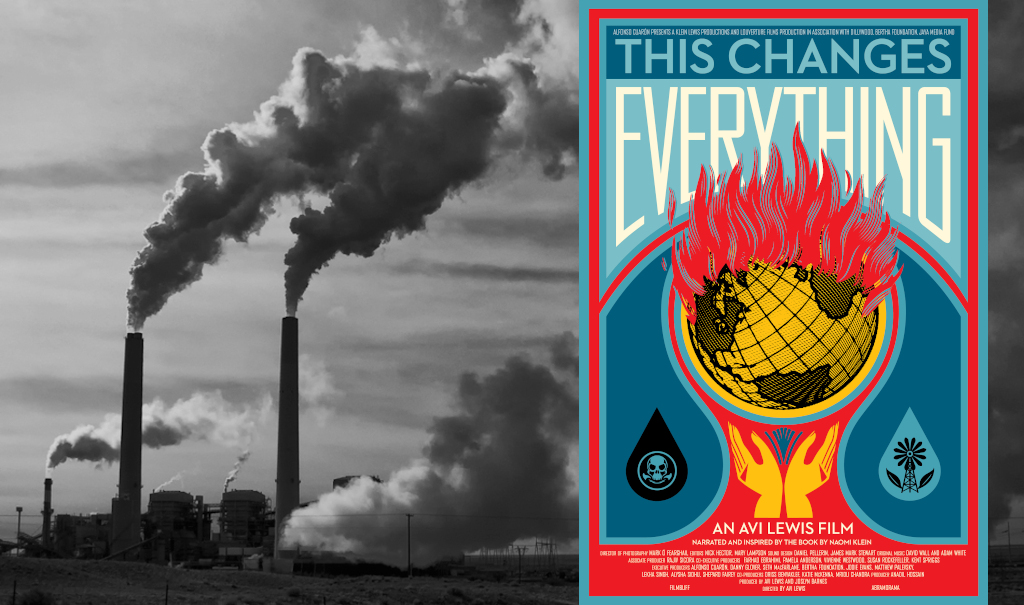
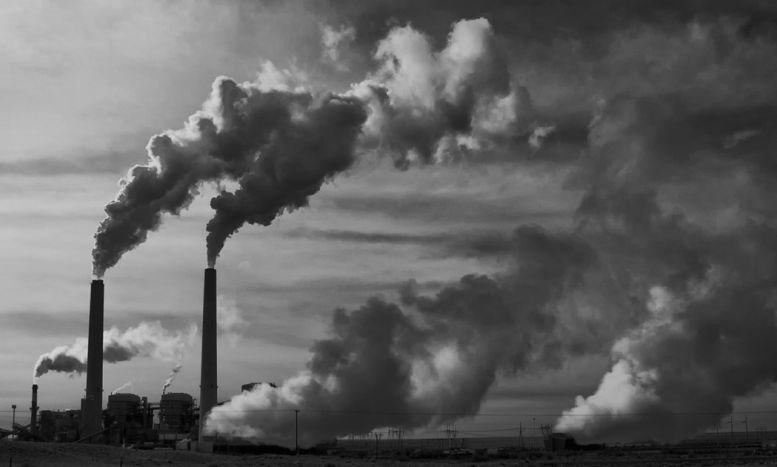
The best-known disruption is climate change due to increased releases of carbon dioxide (CO2) (mainly from burning fossil fuels) and methane (mainly from intensive agriculture and fossil fuel extraction). However, there are many more sources of ecological disruption.
There are nine planetary boundaries that if crossed can destabilize the earth’s ecology. Seven of the nine boundaries have been crossed in the last 25 years – climate change, ocean acidification, loss of biodiversity, the nitrogen cycle, excess freshwater use, land use and chemical pollution.
Failure and delusion
After 30 years of United Nations conferences (COP) that aimed to tackle climate change, more carbon dioxide was added to the atmosphere in 2025 than in any other year. The statement from the 2025 COP did not even mention fossil fuels!
Other UN hosted conferences in 2025 also failed. A conference that aimed to reduce the amount of plastic being produced ended with no agreement. Another, to reduce CO2 released from shipping, also failed to reach an agreement. The list of failures goes on.
Some commentators have argued that at least the UN climate process has slowed the rate of increase of carbon dioxide releases. A slow road to hell is still a road to hell.
China has ramped up its production of renewable energy, in part because it has to import a large volume of oil and gas. It has plentiful supplies of coal and in 2023 it built 95 percent of all new global coal-powered electricity generation. Electricity generation globally is shifting to renewables with no increase in generation in 2025 from fossil fuels and only 1percent in 2024. However, coal remains the largest source of electricity generation (35 percent) followed by natural gas (20 percent).
Electricity is a growing portion of the total energy mix, but most of humanity’s energy needs – around 80 percent – are met by fossil fuels, rather than electricity generated from renewables. If total energy use is considered all fossil fuel uses, including coal, continue to increase. The IEA report states that “Demand for each of the three fossil fuels [coal, oil & gas] grew in 2025, albeit at a slower rate than in 2024.”
In much of Europe and the US, the increase in renewable energy is not primarily replacing fossil fuels; it is supplementing it as the world’s use of energy steadily increases.
If the AI bubble continues, its energy demand is expected to double between 2024 and 2030. Meta’s proposed data centre near Edmonton in Canada will “use more electricity than the entire city of Calgary.” The electricity will be produced by burning gas in a power plant that would emit 3 megatonnes of CO2, which by itself is equivalent to 10 percent of Alberta’s total electricity sector emissions.” That is just one centre and there are plans for many more.
Another alleged way to reduce CO2 releases is carbon capture and storage (CCUS). This is an unproven technology which has major risks for the environment. Canadian Prime Minister, Mark Carney, has touted the Pathways project for CCUS as a way to make Alberta’s oil “clean.” Yet, at an estimated cost of between $20 and $30 billion, it would only remove 6 million tonnes of CO2 per year out of the 90 million tonnes the oil sands release every year in production. CCUS would do nothing to reduce the CO2 from burning bitumen. The head of Cenovus, a major Alberta oil company, has attacked CCUS.
Natural feedback loops are adding to climate change. Ice reflects sunlight while water absorbs it, so as the Arctic ice melts more heat is absorbed in the ocean. Canada’s forests have become a source of CO2 due to raging forest fires and increased insect infestations – both linked to climate change. The wildfires of 2023 released one billion tonnes of CO2, far more than the total from all other Canadian sources. Fires are ravaging forests around the world. There is growing concern of multiple tipping points, for example as the permafrost melts it releases large amounts of CO2 and methane, heating the planet and accelerating the melting.
Renewables are cheaper, but …
Pro-capitalist, technological optimists argue that as it is cheaper to produce electricity from renewable sources than fossil fuels, the “market” will drive the economy to eventually stop burning carbon. However, the world is not starting its energy infrastructure from scratch. It is estimated the fossil fuel infrastructure worldwide is worth $US30 trillion. In addition, the fossil fuel companies have identified fossil fuel sources not yet extracted worth around another $US30 trillion. Once the investments are made, extracting, processing and shipping fossil fuels, especially oil and gas, are extremely profitable. The capitalists will fight tooth and nail not to abandon these investments and potential profits.
Russia’s invasion of Ukraine and the US and Israel’s attacks on Iran have caused turmoil for fossil fuel supplies and prices. For some countries this has accelerated the push for renewable energy. However, it has also led the US, Canada and other countries to double down on fossil fuel production. Banks also still love fossil fuels, seeing lots of profits. In 2024 the 65 largest banks in the world invested in $US906 billion in fossil fuels, which is the second highest year of increases.
While there is increasing investment in renewable energy, it is too little and too slow to avoid runaway climate change. Climate change has had the most publicity of the shattered planetary boundaries, but action is woefully inadequate.
Even less has been done to address the six other broken boundaries. United Nations’ reports usually make cautious predictions, as they are produced by consensus. Yet the Global Environment Outlook offers a “stark vision” of the decades to come. The reality is that the present small steps to tackle ecological disasters are nowhere near what is needed.
Why the abject failure?
The technology exists to tackle climate change. The earth is bathed in plentiful free energy from the sun, the winds and ocean currents, and the heat of the rocks beneath the surface. If humans used renewable energy as it flows through the earth, from the sun and back into space, it would not cause climate change. There are multiple clean ways to store energy.
Yet politicians and corporate bosses have utterly failed to protect the environment. The root of ecological destruction is far deeper than their failure to act; it is rooted in capitalism’s very nature. It is a political and economic system with the purpose of keeping the capitalists in power and increasing their wealth, just as feudalism defended the power and wealth of the landlords.
All wealth ultimately comes from nature and labour. Nature provides the energy, water, air and raw materials, and human labour, work, transforms nature into things to meet human needs. The capitalists’ wealth comes from exploiting labour and robbing nature.
For most of humanity’s existence, after humans had consumed the food and used the objects, what was left – human waste and worn-out goods – returned to nature, as is the case for all of life. Even in cities, human waste (known as night soil) was collected and returned to the land, so the circle of nutrients was unbroken. Humans are not the cause of the ecological disasters.
Capitalism disrupted the circular economy, creating instead a linear economy. Raw materials are removed from the land, transformed into commodities and at the end of their life many are dumped into garbage piles. Human waste is often pumped out to sea, so the nutrients are lost to the land. Even where the solid human waste is collected in sewage treatment plants it is often contaminated by chemicals, toxins and plastics.
Capitalism deliberately makes products that will break and cannot be repaired, wear out, or go out of fashion in a short time – all adding to the waste of nature and labour – all to boost short-term profits.
The goal of capitalists is to ever increase profits. There are never enough profits; capitalism will seek to endlessly gorge on labour and nature, using more raw materials and energy, and producing more waste on the treadmill of ever-expanding accumulation of money. A stable economy would be death for capitalism. However, in a finite world, infinite growth is absurd. Capitalism does not accept the natural boundaries to endless growth of the laws of nature and physics. It only sees barriers to be overcome. In seeking to overcome a barrier it creates new ones, often worse than the early problem.
To overcome climate change caused by burning fossil fuels, capitalism comes up with ever more fantastic “solutions” to avoid the simple one – stopping the burning of fossil fuels. Carbon capture, as explained earlier, is an expensive technology that makes very little impact. Even more dangerous are ideas of geo-engineering to reflect some sunlight away from earth such as adding dust (aerosols) to the atmosphere or placing mirrors in space. The consequences are unknown but could further destroy biodiversity, dramatically shift rain and weather patterns, could be used as weapons and risk catastrophic failure.
To overcome the barrier of the growing scarcity of high-grade ores on land, capitalism is looking to mine the deep seas and even the moon.
Large scale mono-crop agriculture is a gift to pests, so ever-increasing amounts of pesticides (made using fossil fuels) are spayed on crops, further damaging the soil’s fertility.
Metabolic Chasm
Metabolism is the flow through and transformation of materials and energy in a living organism. Marx expanded this concept from individuals to society talking of “the complex, dynamic interchange between human beings and nature,” with the labour process as “the universal condition for the metabolic interaction between [humans] and nature, the everlasting nature-imposed condition of human existence.”
All societies had metabolic interactions, but capitalism produces “an irreparable rift in the interdependent process of social metabolism.”
Marx first analysed this around the robbery of soil nutrients by moving farmed crops and animals into the cities, with the waste flushed out to sea or dumped into landfills – a one-way flow of nutrients. This disruption of the circulation of nutrients robbed the soil and created polluting waste – a double whammy.
Capitalist agriculture first tackled this decline in soil fertility and nutrients (nitrogen, phosphorus, potassium and others) by mining bird and bat guano (deposits of droppings built up over 1,000 of years). Now artificial fertilizers are overwhelmingly used to maintain soil fertilely. Phosphorus and potassium are both from mined sources, which are finite and will run out. Nitrogen fertilizer is made from air by an energy intensive process. The closure of the Strait of Hormuz has seriously disrupted the production and supply of nitrogen fertilizer. The widespread overuse of fertilizer is the cause of disruption of nitrogen planetary boundary and “dead zones” in fresh water as algal blooms, feeding on the nitrogen, remove the water’s oxygen.
Even biologically reproducing “resources” can be destroyed. The fish off the Grand Banks of Newfoundland were once so plentiful they were harvested by dropping baskets in the water. Now the fish are gone! High-quality trees in Canada’s vast forests are increasingly rare, as rapacious logging has been faster than the trees can grow back.
Since Marx’s time the rift has grown into a gaping chasm. One after another planetary boundaries are shattered. Ever more plastic (made from fossil fuels) fills the environment and removing the micro-plastics from every part of the globe will be far more challenging than ending the use of fossil fuels. An increasing number of everlasting chemicals, many of them toxic, are produced each year.
Fossil fuels are a one-off “gift” from nature resulting from a process over 100s of millions of years. Capitalism, unless overthrown, will burn much of it in 300 years.
Humans are part of Nature
A key point in Marx and Engel’s writings is that humans are part of nature. We rely on nature to live. All life, including humans, are in constant interaction with nature, changing nature as nature changes us.
An earthworm changes its world, breaking down leaves into soil. The difference between humans and earthworms is that humans have imagination, so we can consciously change nature. However, as Engels explained, the conscious actions may often in “the second and third places [have] quite different, unforeseen effects.” Plastics were hailed as a great invention as they didn’t rot – the first-place effect, but the second-place effect is that plastic doesn’t rot so it lasts almost forever.
Science and research need to look for the second and third consequences, which means abandoning the short-term profit-driven view of capitalism. Rather than the narrow reductionist view of nature, seeing things in isolation, humanity’s understanding needs to be all-rounded, seeing the interconnections, the webs and flows.
The fight for nature is a fight for jobs
From understanding why there are ecological crises flows the awareness of a path to change. Recognition of causes leads to hope. It is possible to make a new world before the existing world turns to ashes.
Unfortunately, many environmentalists can imagine the end of humanity more easily than they can imagine the end of capitalism. This demonstrates how successful capitalist ideology has been. It is a system that has only been around for a few hundred years of humanity’s long existence. As the metabolic rift and the resulting ecological crises are products of capitalism, accepting its continued existence leads to accepting deep harm to nature.
International Socialist Alternative will fight for every action that slows climate change but recognizes that to end the robbery of nature and the exploitation of workers, capitalism must go.
The core of a program for nature and workers is ending the private ownership of wealth and industry by a tiny minority of society. Public ownership is central to ending the bosses’ misrule.
A program to repair the damage to nature will provide millions of rewarding and fulfilling union jobs. A key part will be the democratic planning of the economy, with workers having control over society and their workplace and consciously deciding the use and allocation of energy, materials and labour to meet humanity’s needs while acting in harmony with nature. This will end the massive waste and built-in obsolescence of capitalism.
The ecological disasters are global; they do not stop at borders so international cooperation will be vital to avoid climate catastrophe.
A social and ecological revolution will transform humans’ relations to each other, to work and nature, ending the deep alienation of today’s society. Restoring nature will unleash humanity’s ingenuity and skills. This is the most underestimated benefit of a socialist society.