On 19 April, Trump posted on Truth Social declaring “NO MORE MR. NICE GUY,” threatening to end the ceasefire and carry out wide-ranging attacks on Iranian infrastructure. Two days later — on the eve of the ceasefire deadline and in the type of walk-back now characteristic of Trump — he announced a one-sided ceasefire extension “until discussions are concluded.”
However, these discussions have not yet materialized and despite all of Trump’s bluster, the Iranian regime seems to be calling the US’s bluff. An adviser to a high-ranking Iranian official responded to the announcement arguing, “The extension of the cease-fire by Donald Trump has no meaning. The losing side cannot set the terms.”
The talks planned for 21 April, which JD Vance was scheduled to attend, fell through after the Iranian side failed to confirm their participation. Then again on 25 April, Trump called off the trip of the US delegation led by Steve Witkoff and Jared Kushner, just hours before they were due to depart, saying that the US would not participate and claiming, “we have all the cards.” But the Iranian regime had already indicated they would not participate in direct talks with the US and would only communicate through the Pakistani intermediaries. In the shadow of these failed meetings, the populations of Islamabad and nearby Rawalpindi were trapped in an intense week-long lockdown with public transit and businesses shut down, many unable to work, and tens of thousands kicked out of temporary housing accommodation.
The war, far from the easy “in-and-out” victory that Trump had clearly envisioned, has been a major and very public humiliation for the US, further undermining Trump on both the domestic and world stages. The apparent terms of the negotiations — with Trump essentially bargaining for a return to the pre-war status quo — expose just how weak the US position is. The war has dramatically weakened US imperialism’s prestige, opening up space for adversaries to maneuver and jeopardizing historic alliances.
Blockading the Blockade?
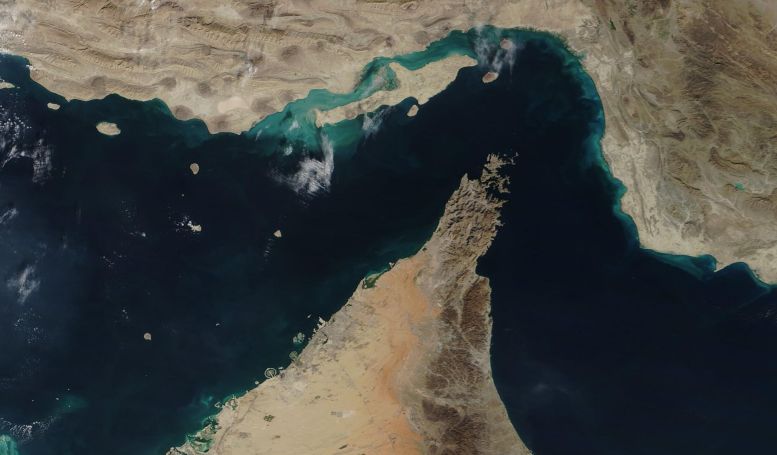
Meanwhile, the standoff in the Strait of Hormuz has only escalated with dueling US and Iranian blockades and increasingly bombastic threats from both sides. In an extremely open admission of the US’s intentions, JD Vance made a statement accusing Iran of engaging in “economic terrorism” saying that “two could play at that game.” Iran’s Islamic Revolutionary Guard Corps (IRGC) forces seized two tankers in the strait last week. The US has seized ships transporting Iranian oil, including in the Indian ocean. Trump has also given orders to “shoot and kill” small Iranian boats placing mines in the strait.
Attempting to use Iran’s blockade strategy against them is a very risky bet by Trump. It is far from guaranteed that the US, and by extension the world economy, can outlast the regime in Iran which has been able to withstand decades of US sanctions and this intense bombing campaign. In addition, there are reports that at least 26 ships carrying Iranian oil have gotten through the blockade.
Trump, who ran on promises to keep the US out of foreign wars and to stop being the policeman of the world, has catapulted US imperialism into a position of directly policing one of the world’s busiest shipping routes. This poses all sorts of potential political landmines as the US navy is expected to monitor the comings and goings of both adversaries and allies in the Gulf.
The reopening of the strait, which has now become the central issue in this war, is not just a question of logistics or firepower. Even if ships have technical permission to pass, the extreme geopolitical instability in the region means that many tankers had insurance coverage suspended or rates dramatically increased. For this reason, at this stage it is difficult to imagine a full reopening of the strait taking place without some sort of agreement from the Iranian regime.
The death toll from the war has surpassed 5,500 across the region. According to the Red Crescent, US-Israeli attacks have damaged more than 125,000 civilian sites in Iran including 339 medical facilities. Israeli attacks on Lebanon have caused widespread damage in Southern Lebanon as well as in Beirut, and displaced over a million people. It is estimated that in its initial phase, the war cost the US a staggering $2 billion per day. The UN reports that this would have been enough to save more that 87 million lives if put toward humanitarian aid (which has been dramatically slashed under Trump).
The short-term future of the conflict is unclear. The full resumption of the war is not in the interests of either side, and Trump’s unilateral extension of the temporary ceasefire is an indication of how desperate the US is for an off-ramp. For the Iranian regime, their very survival at the hands of the most powerful military might in the world can be claimed as a victory. At the same time, as negotiations continue to stall and tensions in the Strait of Hormuz continue, the likelihood of a more permanent ceasefire in the short term is decreasing. The fragile ceasefire could easily be disrupted if lines are crossed on either side that are too much of an embarrassment for Trump or the regime in Tehran to stomach without retaliating.
Even if an extended ceasefire can be reached in the short term, the reality is that the damage done to the world economy and the political impacts of the war including the embarrassment for US imperialism is already in motion—the question now is how much worse can things get.
A War Within the War
Following the ceasefire with Iran, Trump also forced Israel to accept a “ceasefire” for Lebanon. He also organized the first direct talks in decades between Lebanon and Israel, though without the participation of Hezbollah.
The Netanyahu government has moved to establish and expand the so-called buffer zone in Southern Lebanon behind a “yellow line” following the “model of Gaza.” This means a model of total destruction of life-sustaining infrastructure and attacks on anyone who remains in the area. The “ceasefire” is also carried out in the model of Gaza, with repeated attacks continuing despite the agreed pause. In addition, this ceasefire agreement does not seem to have been enough to shift the state of US negotiations with Iran.
Wider Implications
The war in Iran is compounding the issues already facing the regime in the US, with Trump’s declining approval ratings, mounting criticisms and splits within MAGA, blows to his agenda by the courts, and most decisively, increased struggle against his authoritarian regime.
Trump’s ratings are at their lowest point of his second term. Debates and dysfunction in the administration, and in several cases the pressure of mass struggle, have led to the firings of a number of high profile figures including Head of US Border Patrol Greg Bovino, Attorney General Pam Bondi, Secretary of Homeland Security Kirsti Noem, as well as Secretary of the Navy John Phelan. The Trump regime is at its weakest point so far, and recent special elections are painting a very negative picture for the Republican party heading into the Midterm elections in November. However, this should not be a signal for complacency for the anti-Trump movement, as a weakened Trump administration can become even more erratic and threatening. The fact is, it is only the working class that can deal the knockout blow against Trump and Trumpism.
The Trump regime’s problems are not just isolated to the domestic sphere. The undermining of the alliance between the US and NATO and other allied countries has been dramatically accelerated by the war in Iran. The unabashed groveling at Trump’s feet that defined the “western alliance” over the first year of Trump 2.0 is beginning to shift. NATO allies have refused to assist in Trump’s blockade, and a number of countries including Spain, France and Italy have refused the US use of their bases and airspace.
The UK and France have organized multiple meetings about the situation in the Strait of Hormuz with over 30 countries present, independent of the US. However, the fact that these talks have explicitly focused on protecting navigation after the strait is reopened shows the relative powerlessness of these governments to fundamentally shift the standoff between the US and Iran which is holding the world economy hostage. Leaked Pentagon emails which indicate that the US is considering pushing for Spain’s ouster from NATO and reevaluating its position on the Malvinas/Falkland Islands which are currently claimed by the UK, are signs that this process of undermining of the traditional US alliances will continue. US relations with allies in the Gulf are also fragile and the war has shattered the illusion of the Gulf states as “safe havens.” There is a fear in the Gulf autocracies that this war and destruction could leave them mired in total disaster if Trump pulls out leaving behind a more emboldened regime in Iran whose control of the Strait is consolidated.
Substantial and very expensive damage to US military bases along with serious munitions shortages, has also exposed weaknesses of US imperialism in the military sphere. Following many reports indicating Russian intelligence assistance to Tehran, it was also recently revealed that Iran used a Chinese spy satellite to target US bases. Otherwise, Chinese imperialism has generally kept its distance in the war with restrained statements that have not been backed up with action. The inability of the regime in Beijing to take advantage of the enormous vacuum left by US imperialism’s weakness is a result of its own domestic crises. However, China and Russia have undoubtedly been keeping close watch of US mishaps, and despite a temporary cool-off between the US and China as Trump’s delayed visit to Beijing in May looms, the conflict between these key imperialist powers will continue to be central to global developments.
Crisis for the World Economy
The Iran war is exposing the existing vulnerability which is baked into a world economy which is now headed toward stagflation—low growth and high inflation. High debt along with high interest rates make it even more difficult for governments to maneuver and cushion the shock. The IMF has downgraded its world growth forecast, predicting that global growth will fall from 3.4% last year to 3.1% in 2026. But this projection is contingent on a scenario where some relative stability is established in the near-term. Continued blockade of the strait or a return to full-scale fighting has the potential to tip the world economy toward a much worse outcome.
March saw the largest increase in global energy inflation in at least 25 years. The head of Vitol, the world’s biggest independent oil trader, projects that the oil market will lose at least one billion barrels of crude and refined products as a result of the war. The energy shock will have wide-ranging implications on the airline industry, global supply chains, food production, and more. For example, the German airline Lufthansa recently announced it would cut 20,000 flights over the next six months to save jet fuel.
US inflation has reached its highest level in nearly two years. Trump’s approval rating on the economy took a nosedive hitting 30% in April, down from 38% in March, which indicates that he is being undermined on a key issue for his base. The Chinese economy is also starting to feel the impacts of the war. China’s exports grew 2.5% in March compared to 21.8% in January and February, and its export-based economy is also facing shortages of raw materials such as plastics necessary for production of a variety of goods.
The crisis is not isolated to the energy industry, and has the potential to unleash what the UN’s Food and Agriculture Organization has called a “global agrifoods catastrophe.” Shortages and skyrocketing prices of fertilizers during planting season means a best case scenario of higher food prices and a worse case of severe shortages and famine. The real impacts of the war are only beginning to be felt and as with all crises under capitalism, it is workers and the poor globally who will pay the price.
Political Impacts of the War
Deeply connected to prospects for the world economy are the looming political implications of the war and the energy shock, which are only just beginning. The Iran war will be remembered as another “before and after” moment for global politics.
The momentum for the right globally has been a dominant political trend over the past period. While far from defeated, this trend is starting to run into some limits, which is not unrelated to the complications facing the Trump regime. Being linked to Trump is increasingly a liability for both governments and the global far right. The recent electoral defeat of extreme-right strongman Viktor Orbán in Hungary is the most high-profile example. Orbán’s defeat was undoubtedly a homegrown phenomena, but his links to Trump were certainly not a boost for him.
The message of the right globally is less coherent without being able to ride on the Trump coattails. However, without a clear, fighting left alternative for the working class, this does not automatically translate into gains for left-wing ideas. Again, the example of Hungary is instructive where Peter Magyar, the figure who won the recent election is a conservative and former Orbán ally. This underscores the urgent importance of building independent working-class and socialist opposition to reaction and militarism of the ruling classes, as well as against the far right.
The energy shock, which has led to price spikes and shortages, is already leading to protests and strikes. The IMF and other financial institutions issue warnings to governments about going too far with subsidies or other measures to offer relief. However, this runs up against the political reality of what it would mean for governments to do nothing. In Ireland fuel price hikes of 25-28% provoked blockades and protests mainly by farmers and truck drivers, which won significant concessions from the government. In the Philippines increased prices and shortages were responded to with a two-day strike in March. In northern India, factory workers protested demanding higher wages in response to price hikes on necessities including gas used for cooking.
Inflation and high cost of living were a major impetus for strikes and working-class struggle following the pandemic and the beginning of the Ukraine war. More struggles like these are bound to emerge as the impacts of the Iran war radiate throughout the world economy. The left and the workers movement should be linking these fights to the building of left political alternatives and opposition to war and militarism.
For a Revolutionary Struggle Against War and Militarism
Protests against the war in Iran have been very limited. However, the raw material exists in society for a mass anti-war movement that can shake and even topple the imperialist war mongers. In Japan, attempts by the right-wing Takaichi government to amend the “pacifist” constitution has brought tens of thousands into the streets. Plans to introduce military conscription in Germany has led to two student strikes of over 50,000 with a third planned for next month. While the movement in Iran was pushed back by the US-Israeli bombing campaign, the discontent that drove those protests has not disappeared and will re-surface at some stage.
In the US, Trump is requesting a US$1.5 trillion military budget, a 40% increase which would come at the expense of funding for education, housing, and healthcare. While anti-war struggle in the US has been very muted, the war is massively unpopular in US society which is no doubt reflected in massive participation in the April No Kings protest. 200 US military veterans were recently arrested as part of civil disobedience against the war in the US capitol, which could be a sign of more anti-war fightback to come.
ISA is standing shoulder to shoulder with workers and youth around the world fighting back against militarism, austerity, and all imperialist war. We stand for revolutionary, internationalist struggle for a socialist world where resources are used collectively in the interests of humanity and the planet, not to feed the imperialist war machine or the profits of the bosses.