This article was originally published in early June 2026, in issue #3 of International Marxism, the international political journal of International Socialist Alternative. Click here to subscribe or to buy a copy of the full issue.
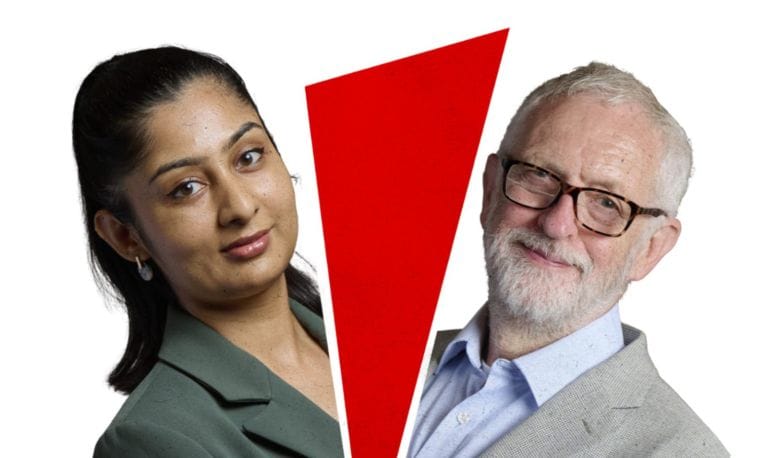
Last July, the announcement that Jeremy Corbyn and Zarah Sultana would be forming a new political party sent a shockwave through the left in Britain and beyond. In a few days, 800,000 people signed up in support, reflecting the burning desire for a left political alternative to both a deeply unpopular Labour government, and a resurgent far right.
This enthusiasm was further expressed by an upsurge of working-class self-organization, with a network of over a hundred Your Party “proto-branches” set up almost overnight. Working-class and left-wing activists were champing at the bit to build this new political force. Not since Corbyn’s tenure as Labour leader, which saw it balloon in size to become Europe’s biggest party, had such enthusiasm for a political force on the left emerged in British society.
Unfortunately, before long, it seemed the wheels had come off the nascent project. In the few short months after the initial announcement, a series of delays, high-profile clashes between the two founders, missed opportunities and expulsions have left all but a shadow of the potential force Your Party could have developed into. Initial polls indicated the new left party could debut on support levels up to 18 percent—and this before it had even been officially launched. The latest indications put Your Party on less than 1 percent support and the party did not even meaningfully contest vital Welsh, Scottish and local elections in May. The 800,000 initial signups translated into no more than 60,000 members at its peak, with the party hemorrhaging members since. While the last word has not yet been written on Your Party’s future, it is clear that the project is failing.
The whirlwind of events that lead to this point is rich in lessons. It shows the enormous enthusiasm that can be generated by a left alternative to the crumbling political establishment today. At the same time, it shows the complete bankruptcy of reformist leadership, which squandered a historic opportunity.
Political Roots
The seeds for the launch of a new party had been sown in society long before.
Labour was catapulted into government in 2024 by the historic decline of the Conservative Party (Tories)—the oldest capitalist party in the world. After years of brutal austerity, endless scandals and economic turmoil, they were decisively rejected in the general election of that year.
Starmer’s Labour Party walked into power on the back of a total collapse in the Tory vote and a high rate of abstention. But this was enough for a massive majority in the House of Commons, where they now controlled 411 out of 650 seats, although Starmer gained 3 million less votes than Labour won when Corbyn was leader in 2017. In the years prior to the election, and following a leftwards shift during Jeremy Corbyn’s tenure, Starmer’s leadership had worked hard to make the party a safe pair of hands for the ruling class, overseeing a right-wing counter-revolution in the party.
Starmer was never particularly popular, with his YouGov popularity tracker maxing out at 33 percent support in the middle of the crisis of the former Conservative government. Nevertheless, the end of more than a decade of Tory rule lifted hopes for Labour’s promise of “change.” These hopes were quickly dashed, as Labour inherited the same poisoned chalice as their predecessors—particularly the ailing British capitalist economy. They turned to new rounds of spending cuts and picked up, and even doubled down on where the Tories left off by blaming migrants for the problems in society—in turn boosting the popularity of the far right.
As anger grew toward Labour, the potential for an opposition on Starmer’s left was becoming clear. Immediately following the election, Socialist Alternative published a pamphlet, The New Party We Need, which stressed the urgency of launching a new party and laid out the key pillars of what we thought it would need to be in order to succeed: a mass, democratic party rooted in the workers movement, based in struggle, and armed with clear socialist policies.
Starmer’s approval ratings only continued to plummet — earning him the position of most unpopular Prime Minister in British history. But in Parliament, a left-wing pole was developing. Jeremy Corbyn was re-elected as an independent MP, successfully fending off the Labour Party in his home seat in Islington, London at the general election. Corbyn’s tenure as Labour leader saw hundreds of thousands join the Labour Party to support him and established him as the most prominent figure on the modern British left. Alongside his own expulsion from the Labour Party, thousands of other Labour Party activists were either forced out through Starmer’s internal witch hunt against socialists in the party, or left in disgust at Labour’s rightward shift.
On top of this, we saw the development of an independent bloc in parliament—the four “Gaza independents” (elected on the back of mass anger against Britain’s backing of Israel’s genocide), as well as MPs suspended from the Labour Party for refusing to support Starmer’s cuts. Most prominent among the latter group was Zarah Sultana, whose radical profile made her a popular figure on the Labour left. While there had been many small left-wing parties formed since Labour’s transformation into an out-and-out bourgeois party in the 1990s, never before had so many high profile leaders of the left found themselves outside the party’s ranks.
The urgency of the situation was underscored by the rise of Nigel Farage’s racist Reform UK, which saw a seemingly inexorable rise in popularity over the first year of Starmer’s government. Only a few weeks after the election itself, a series of racist riots, led by the far right, broke out across the UK, followed by potentially the biggest far-right street protest in British history in September 2025. It was clear that the race was on to fill the vacuum of opposition to Labour. Corbyn, especially with the backing of other left figures, was in a unique position to launch something that could have genuine mass support and fill that vacuum.
Early Stages—A Party Born in Crisis
Unfortunately, Corbyn’s approach was far from matching up to the urgency the situation demanded. In practice, he was dragged kicking and screaming into the ongoing process of discussion about building a political alternative. Initial discussions around forming a new party were held by the secretive “Collective” group, in a series of exclusive, invite-only meetings. But while behind closed doors, foot-dragging and prevarication dominated, thousands of activists on the ground were hungry to build something new.
The reality was that Corbyn was not really in favour of a new party. His approach was geared around supporting independent MPs, councillors and community groups, with the question of a new party reserved for some unspecified future date. This was a reflection of his alliance with the Gaza independents who, while standing against the genocide in Gaza and austerity in general, do not represent socialist politics. On the other hand, Zarah Sultana and those around her were, rightly, in favour of launching a new party as soon as possible and defended important elements of a socialist program.
While much has been written in the capitalist press (and even some of the “left” media) about the rift between Corbyn and Sultana, the reality is that this political difference is what lay at the heart of their recent disputes—not a mere clash of egos. When Zarah’s position in favour of launching a party, co-led by Corbyn and herself, won a majority in the Collective group, she forged ahead and announced it. Corbyn, who was opposed to co-leadership, was furious and walked out of the group. But had Sultana not “jumped the gun,” a party may never have been announced. At every stage, Zarah Sultana and those around her pushed the process forward while Corbyn and those around him sought to hold the process back.
But the enthusiasm on the left had already erupted. Rallies launching local proto-branches of the new party were held throughout Britain, attended by thousands of people. This was a new wave of working-class self-organization. The enthusiasm for Your Party reflected a layer in society that had drawn conclusions from the failures of electoralism under Corbynism, followed by the experience of Black Lives Matter, the mass strike wave of 2022, and crucially the Palestine solidarity movement. For those mobilized by the prospect of a new party, this would be a party rooted in grassroots organizing—not just passive electoralism. As such, there was no mood to sit and wait for those at the top.
Socialist Alternative called to “get the party started” with steps like launching a membership drive and signing people up, building for a mass launch rally in a football stadium, and forming democratic local branches leading up to a founding conference in the autumn, among other steps. But meanwhile from the top, there was a deafening silence. Proto-branches remained unrecognized and unsupported by the official structures, and it was unclear what the next steps would be.
Behind the scenes, the party leadership was in disarray. Collective had broken down, with Corbyn’s grouping furious about the “unilateral” announcement of the party. The founding process had been given over to a “working group” made up only of the Independent Alliance of MPs. Zarah Sultana and her supporters were increasingly sidelined. This was the context of the—according to Corbyn—unauthorized launch of an online membership portal by Zarah Sultana’s group. Every step forward up until that point had been taken because Sultana had dragged Corbyn along. As with previous steps she had taken, the portal’s launch, which finally established a means to join the new formation, was greeted with enormous enthusiasm. Within just a few hours, more than 20,000 people signed up as members of this new party!
But signing up members and taking membership fees, outside the control of the leading clique, was a step further than they were prepared to accept. The membership portal was publicly denounced by Corbyn and the Independent Alliance MPs, along with the threat of legal action. Zarah responded with accusations of being “frozen out” and subjected to a “sexist boys club.” Suddenly, the factional divides that had been brewing behind the scenes were thrust into the open in disastrous fashion. It was only the ongoing determination from below, with large meetings continuing in cities around the country, which kept the show on the road, even if momentum was beginning to stall. By the time the Corbyn faction was forced to launch an “official” membership portal (the cat was out the bag now of course), there was no such explosion of sign-ups, and the leadership tellingly refrained from announcing membership figures for weeks.
But politics abhors a vacuum, and the Green Party’s new leader Zack Polanski had begun a rebrand along left-wing “eco-populist” lines. A section of people who had been looking toward Your Party—especially those from a younger generation less connected to the organized left and workers’ movement—were already beginning to weigh up their options as the cracks started to show in Corbyn’s project.
A Very Radical Party
New left formations in the 21st century have tended to base themselves on a very weak version of reformism. Corbyn’s Labour leadership provoked the fear and anger of the capitalist class, but while Corbyn’s positions on international issues were an important break with previous pro-imperialist Labour leaders, his core program was barely to the left of the Labour Party leadership through much of the 20th century. Rather than relying on working-class struggle, it looked toward political maneuvers in a futile effort to make peace with big business bosses and Blairites. The implacable hostility of the capitalists spoke more to the inability of modern capitalism to deliver even small reforms than it did to the radicalism of Corbyn’s own approach.
However, the movement around Your Party had undergone a profound shift to the left compared to the era of Corbynism 1.0. The political statement agreed at the party’s founding conference reflected this, stating that the party’s goal is “the transfer of wealth and power, now concentrated in the hands of the few, to the overwhelming majority in a democratic, socialist society.”
This shift to the left was seen most strikingly through Zarah Sultana herself. Elected in 2019 at the tail end of Corbynism, she had a record for standing against austerity and supporting trade union struggles. However, once free from the political straitjacket of Starmer’s Labour, she moved toward a more explicitly socialist position. At a march in October, organized by PACE (The People’s Alliance for Change and Equality) Kirkless, she said:
“We’re fighting for a thing called socialism. Not tweaks to a broken system, not a wealth tax here and a lowering of bills there—we are calling for a fundamental transformation of society, where workers control the means of production and the wealth of our communities is controlled by our communities. That is socialism.”
“Socialism” as a word has a long history of usage by Labour Party politicians, but it is rarely clear what is meant by the term. This was different—we now had a high-profile Member of Parliament explicitly calling for a socialist transformation of society at rallies around the UK. It reflects the profound radicalization of the generation of left activists who had been through the experience of Corbynism and other movements, and who have seen the deep crisis of the capitalist system playing out before them. Zarah Sultana expressed a trend in the party that, while not expressing a fully worked-out revolutionary approach, nevertheless represented a break with the reformism of previous periods. This tendency is sometimes described by Marxists as “centrism” (a position between reform and revolution). Such developments are always unstable, but can open up a wider layer to revolutionary, Marxist ideas in the course of struggle. At the same time, however, the right wing of the party around Corbyn was looking to firm up their hold, which was also expressed in a “toning down” of public political statements.
Implosion Stage 1—Founding Conference
The party’s founding conference, organized by unelected staffers on behalf of the “working group” of independent MPs, was engineered to ensure that Corbyn’s clique maintained control over the party.
In the run-up to the founding conference in late 2025, a series of draft founding documents were released, along with a plan for hastily-organized regional assemblies to discuss them. As we said at the time about the process:
“It will provide very limited opportunities for the party’s working-class membership to make proposals, debate ideas and democratically decide the way forward. Delegates for the conference will be chosen by lottery, not elected. Regional assemblies will debate founding documents, but not vote on proposals or amendments. Suggestions from thousands of small ‘breakout groups’ will be mysteriously ‘composited’ in a kind of black box.”
In opposition to this undemocratic approach, Socialist Alternative members played a role in setting up the “Platform for a Democratic Party,” calling to recognize the proto-branches and set up genuinely-democratic delegate structures to ensure a full discussion in the run-up to the conference. This found wide support among YP members.
Amendments to the founding documents were not allowed to be proposed from the membership. Rather, Your Party HQ would present the conference with pre-made amendments to be voted on, often as a binary choice—and which were always on terms that could be accommodated by the right-wing leadership
To make matters worse, the Your Party bureaucracy suspended several leading members of the Socialist Workers Party on the eve of conference, on the grounds of their membership in another organization. Whether members would be allowed to remain members of other socialist and left-wing organizations was to be one of the key discussions of the conference weekend—but the leadership had clearly already made up its mind.
The conference floor saw an upsurge of opposition, with delegates railing against the bans, against the stitched-up amendments, for party representatives to take a workers’ wage and other measures. The popularity of these ideas was made concrete in the voting throughout the weekend, at which almost all the key votes were decisively won by the left—to maintain the language around socialism and the working class in the party’s political statement and against an outright ban on dual membership—the latter winning on almost 70 percent.
Implosion Stage 2—CEC Elections
But while many activists had learned lessons from Corbynism, the bureaucracy at the top of Your Party (largely based on the same figures who ran Corbynism in its original incarnation) was also learning lessons. As the elections to the party’s first Central Executive Committee (CEC) began, their compromising approach offered toward “socially conservative” independent MPs was not extended to the left. Instead, they prepared for an all-out war.
The right wing announced a slate of candidates, “The Many.” They waged their campaign by leveraging the party’s infrastructure, phonebanking members, and outrageously misusing Corbyn’s separate “Peace and Justice Project” mailing list which included tens of thousands of YP members and supporters, to mobilize a passive layer of membership on the basis of Corbyn’s prestige, drumming up fears of a “bullying campaign” against Corbyn. As such, they won a comfortable victory in the elected leadership, with the main left faction, Grassroots Left (which Socialist Alternative was part of), gaining a minority of seats.
Since winning the CEC, The Many have immediately proceeded with a “scorched earth” approach, enacting sweeping bans on membership of organized socialist groups in a concerted effort to push out the organized left. This has seen an exodus of activists out of the party—not just from those on the Marxist left but thousands of supporters repelled by the undemocratic witch hunts and the hostility toward socialists in the party.
The leadership are now forging ahead with Corbyn’s vision for the party rather than the mass, member-led socialist party that so many members had hoped for. Instead of a clear socialist orientation, they have resorted to electoralism, courting communalism and supporting loose “community independents” groups—including in at least one case, a group of former Tory councillors. At the same time, the Green Party has seen soaring popularity on the basis of a political program in many ways similar to Corbynism in its original iteration. In the electoral arena, the space that Your Party’s launch was once poised to occupy has now been largely filled by the Greens.
What Way Forward?
This trajectory for Your Party has resulted in an understandable wave of demoralization throughout the party’s ranks. Resignations have poured in through proto-branches over recent weeks. In some cases, entire proto-branches have announced their departure, and continued their existence as independent socialist groups. In Scotland, the entire Interim Executive Committee has resigned, announcing their intention to set up a new party in Scotland.
However, these self-organized groups still have important signs of life. In the midst of this crisis, and with no support from HQ, the proto-branches organized a 500-strong bloc on the mass “Together” demonstration against the far right in March. Proto-branches ran dozens of candidates in the May local elections, with some winning hundreds of votes without any national support. These local groups, while weaker than they once were, still represent an important force—perhaps the most significant development to come out of the disappointing trajectory of Your Party. Socialist Alternative in England, Wales and Scotland is working to continue building these local groups independent of Your Party’s structures.
The massive potential of Your Party has now been all but squandered—this is undoubtedly a setback in the fight for working-class political organization. It highlights the crucial task of building the forces of Marxism, in order to ensure the success of new openings in the future.